
Ergonomic Kitchen Design Tips
We may earn a commission for purchases made using our links. Please see our disclosure to learn more.
An ergonomic kitchen design focuses on how your body moves while cooking, cleaning, and preparing food. When counters, appliances, and storage are poorly placed, everyday tasks can lead to unnecessary strain on your back, shoulders, and joints. This article breaks down practical, research-supported ergonomic kitchen design tips that improve comfort, efficiency, and long-term physical well-being—without requiring a full remodel.
What Is Ergonomic Kitchen Design?
Ergonomic kitchen design means shaping your kitchen around how your body naturally moves. Instead of forcing awkward postures, repetitive bending, or unnecessary reaching, the space supports smoother, safer motion.
A well-designed ergonomic kitchen:
- Reduces stress on joints and muscles
- Improves workflow and efficiency
- Lowers fatigue during meal prep
- Supports long-term physical well-being
Over time, these benefits add up. Cooking becomes more comfortable, and daily strain quietly disappears.
Common Kitchen Pain Points Most Homes Overlook
Many kitchens look great but feel exhausting to use. That’s usually due to design decisions that prioritize appearance over function.
Common ergonomic issues include:
- Countertops that don’t match user height
- Appliances placed without movement logic
- Deep cabinets that require frequent bending
- Hard flooring that stresses feet and knees
- Poor lighting that strains the eyes
Individually, these problems seem minor. Together, they create daily discomfort that builds over time.
Ergonomic Kitchen Design Tips You Can Apply Today
Counter Height and Work Zones
Your prep surfaces should work with your body—not against it. Ideally, countertops sit just below elbow height, allowing relaxed shoulders and neutral wrists.
Helpful adjustments include:
- Separate heights for prep, cooking, and baking
- Pull-out work surfaces for flexibility
- Adjustable islands when possible
Even small changes can dramatically improve posture.
Smart Appliance Placement
Appliances should support a natural flow of movement.
Better ergonomic placement includes:
- Wall ovens installed at chest level
- Dishwashers slightly elevated to reduce bending
- Microwaves placed below shoulder height
Efficient movement saves energy and reduces strain.
Storage That Reduces Bending and Reaching
Storage design plays a major ergonomic role.
Improve comfort by using:
- Pull-out drawers instead of deep shelves
- Lazy Susans for corner cabinets
- Vertical storage for trays and cutting boards
Keep frequently used items between waist and shoulder height whenever possible.
Flooring and Anti-Fatigue Support
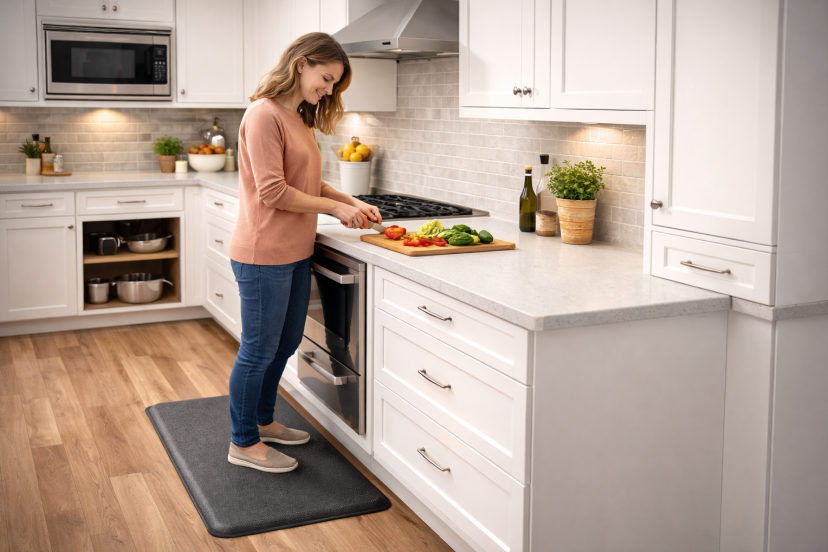
Standing for long periods on hard floors stresses joints.
Ergonomic flooring solutions include:
- Cork or rubber flooring
- Anti-fatigue mats near prep zones
These surfaces absorb shock and reduce pressure on your lower body.
Lighting That Protects Your Eyes
Good lighting improves safety and reduces eye strain.
Layered lighting works best:
- Task lighting under cabinets
- Ambient ceiling lights
- Focused lighting for sinks and stoves
Clear visibility supports accuracy and comfort.
Recommended Products
Here are five ergonomic kitchen products known for comfort and usability:
- Anti-Fatigue Kitchen Floor Mat – Cushions joints during long standing periods
- Pull-Out Cabinet Organizer – Eliminates deep bending and awkward reaching
- Ergonomic Kitchen Knife with Soft Grip – Reduces wrist and hand strain
- Height-Adjustable Rolling Kitchen Cart – Adds flexible prep space at the right level
- Touchless Kitchen Faucet – Minimizes repetitive hand motion
These products work best when combined with a thoughtful layout.
What Research Says About Ergonomics in the Kitchen
Scientific research confirms that kitchen design has a direct impact on physical comfort, safety, and task efficiency.
A recent rapid scoping review on kitchen ergonomics, published in Human Factors in Healthcare, examined how people interact with domestic kitchen environments. The review found that ergonomic principles—such as appropriate counter heights, reachable storage zones, and efficient movement paths—play a key role in reducing physical strain during everyday kitchen tasks. Poorly designed kitchens were linked to awkward postures, inefficient movement, and increased fatigue, while ergonomically planned spaces supported smoother, safer task performance.
Another widely referenced study explores how adults, particularly older people, interact with their kitchen environments during everyday tasks. The research identified repetitive bending, extended reaching, limited dexterity, and visual strain as major contributors to discomfort. Participants often developed coping strategies when kitchens failed to meet ergonomic needs, highlighting how strongly design influences daily physical stress. The study emphasized that adaptable, user-centered kitchen layouts help reduce strain and support independence.
Together, these studies reinforce a clear conclusion: ergonomic kitchen design directly affects physical well-being. Kitchens that minimize awkward movements and repetitive strain help people work more comfortably, efficiently, and safely over time.
Small Kitchens vs. Large Kitchens—Ergonomics for Every Space
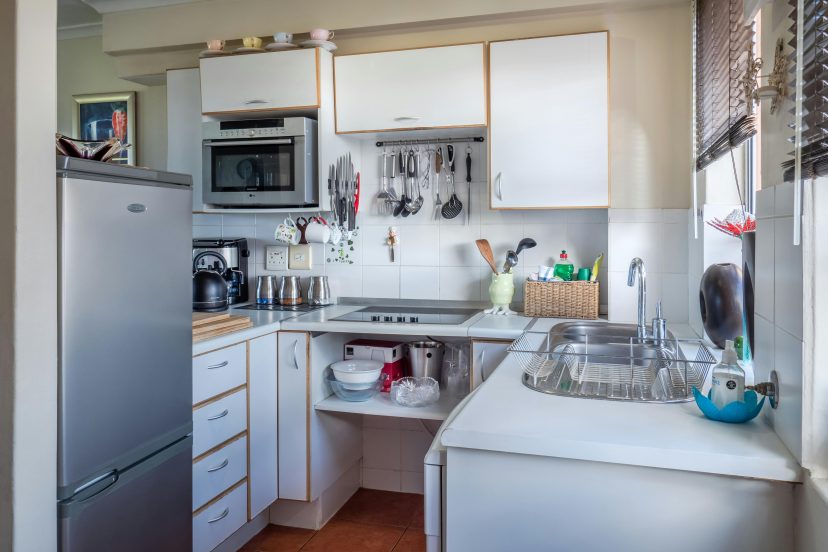
Ergonomic design works in any kitchen size.
In small kitchens:
- Vertical storage improves reach efficiency
- Fold-down counters add flexibility
- Compact appliances reduce steps
In larger kitchens:
- Zoning prevents excessive walking
- Multiple prep areas reduce congestion
- Clear pathways support smooth movement
Smart layout matters more than square footage.
How Ergonomic Kitchens Improve Daily Life
An ergonomic kitchen doesn’t just prevent discomfort—it improves daily living.
Many people notice:
- Less fatigue after cooking
- Better posture throughout the day
- Faster, smoother meal prep
- Increased enjoyment in the kitchen
These changes feel subtle at first, then transformative.
Final Thoughts
Ergonomic kitchen design is about creating a space that supports your body, not works against it. Thoughtful layout choices, proper counter heights, accessible storage, and supportive flooring can significantly reduce daily strain and improve how comfortably you move through the kitchen. Whether you make small adjustments or plan a larger update, prioritizing ergonomics leads to a healthier, more efficient kitchen that feels better to use every day. For broader ergonomic principles, this guide on ergonomic office supplies explores how design impacts comfort across home environments.
FAQs
1. What is the goal of ergonomic kitchen design?
To reduce physical strain while improving comfort, efficiency, and safety during daily tasks.
2. Can ergonomic upgrades work without a remodel?
Yes. Simple changes like pull-out storage, better lighting, and anti-fatigue mats make a big difference.
3. How do I know if my kitchen counters are too high or low?
If your shoulders lift or your back bends during prep, your counters may not be ergonomically suited to you.
4. Is ergonomic kitchen design only for older adults?
No. Everyone benefits, especially people who cook often or experience joint discomfort.
5. Are ergonomic kitchens more expensive?
Not necessarily. Many ergonomic improvements are affordable and focus on layout rather than luxury materials.