7 Benefits of Active Seating for Better Ergonomics
We may earn a commission for purchases made using our links. Please see our disclosure to learn more.
What if the secret to fixing your desk posture wasn’t sitting stiffer—but moving more? Traditional chairs lock you in place, but active seating keeps your body subtly moving, your core firing, and your energy up all day long. Say goodbye to the afternoon slump and the back-of-the-neck aches! Here are 7 awesome benefits of active seating that make switching up your desk setup totally worth it.
What Is Active Seating?
Active seating includes chairs, stools, and cushions designed to allow movement while you’re seated.
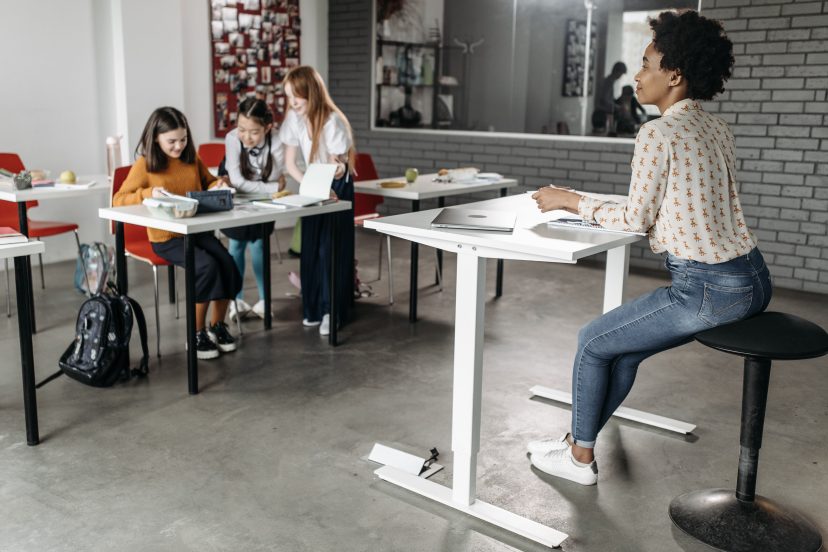
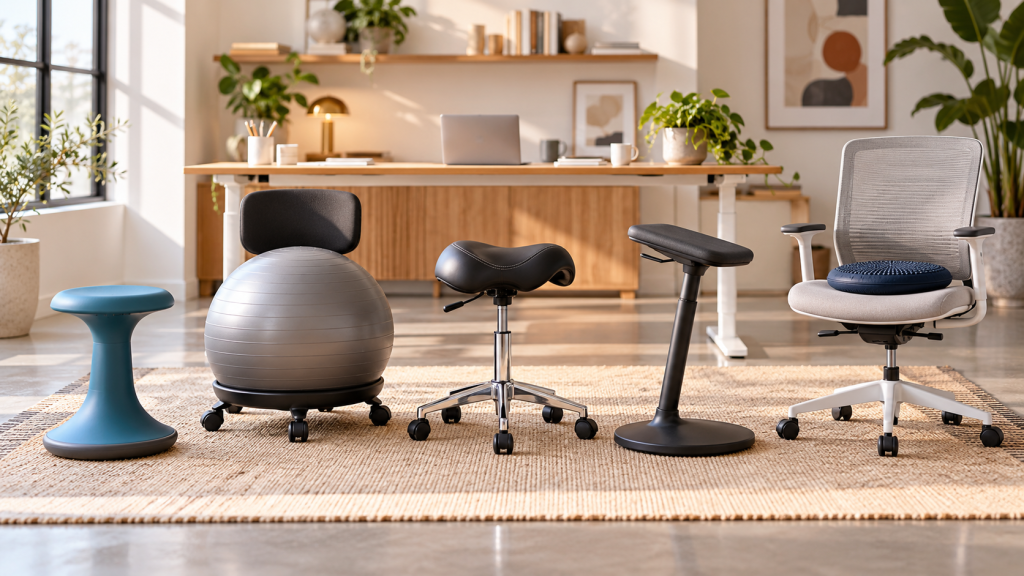
A wobble stool might tilt from side to side. A balance ball chair responds as you shift your weight. Saddle stools and sit-stand stools put your body in different positions than a standard office chair.
The goal is simple: give your body more freedom to move.
That doesn’t mean active sitting counts as exercise. Small shifts won’t replace walking, stretching, or regular physical activity. Think of active seating as another way to add variety to a long workday.
7 Benefits of Active Seating
1. Encourages Natural Movement While Sitting
It’s easy to settle into one position and stay there much longer than you intended.
Active seating makes movement easier.
On a wobble stool, you can lean forward while typing, shift sideways to grab something, or gently rock while thinking through a problem. These aren’t big movements, but they break up the feeling of sitting completely still.
That can make desk work feel less restrictive.
An active chair won’t automatically make you more active, though. Your habits still matter. The seat simply gives you more opportunities to move.
2. Makes You More Aware of Your Posture
Have you ever looked up from your screen and realized you’ve been hunched over for the last 20 minutes?
Active seating can make those habits easier to notice.
Because many active chairs move slightly beneath you, you may become more aware of leaning too far forward or putting more weight on one side.
That awareness can prompt you to reposition yourself.
Still, active seating doesn’t guarantee perfect posture. A backless stool can become tiring during a long work session, especially if you’re constantly trying to hold yourself upright.
If you want more support, our guide to choosing the right ergonomic office chair explains what to look for in a traditional setup.
3. Adds Gentle Muscle Activity
Balance stools and exercise ball chairs require small adjustments to keep you comfortable and steady.
Your abdominal, hip, and back muscles may help with those movements.
That sounds like a core workout, but don’t expect too much.
A systematic review published in Applied Ergonomics looked at seven studies on dynamic sitting and trunk muscle activity. Five found no significant difference compared with static sitting. Two found differences but also reported increased discomfort or fatigue.
So yes, active seating can involve some extra movement. No, it shouldn’t replace actual strengthening exercises.
4. Can Make Long Sitting Sessions Feel Less Stiff
Stand up after a two-hour meeting and you’ll probably understand this one immediately.
Your hips feel tight. Your shoulders want to roll backward. Your legs need a minute.
Active seating gives you more ways to change position before you reach that point.
A tilting stool lets your hips move slightly. A balance cushion lets you shift your weight without leaving your chair.
For some people, those small changes simply feel better than sitting rigidly in one position.
That said, active seating hasn’t been proven to prevent stiffness or back pain. If you’re uncomfortable every day, also check your desk height, monitor position, and chair setup.
5. Encourages More Position Changes
You don’t have to use the same chair from 9 a.m. to 5 p.m.
In fact, mixing things up may be more comfortable.
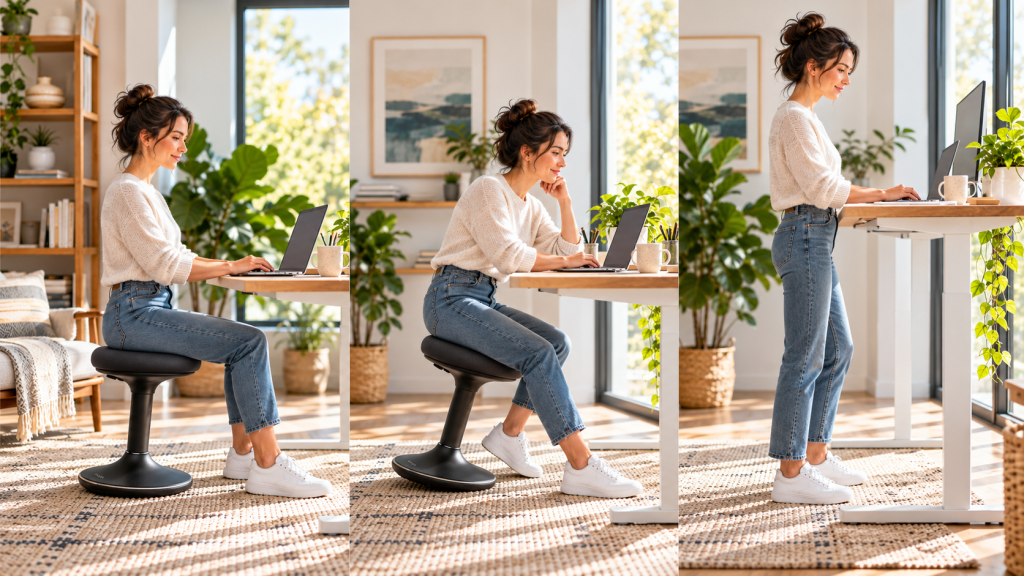
You might use a supportive office chair while writing, switch to a wobble stool for a short meeting, and stand while reading documents.
Active seating fits naturally into that kind of routine.
Research also supports reducing long periods of sedentary behavior. A 2023 meta-analysis of 23 randomized controlled trials found that several workplace interventions reduced sitting time, particularly when workstation changes were combined with reminders to move.
One important detail: wobbling while seated is still sitting.
Active seating works best when you also stand, walk, stretch, and take regular breaks.
6. Gives You More Options for Different Tasks
Not every task feels best in the same position.
You may want solid back support while working on a detailed spreadsheet. For brainstorming or a quick video call, a wobble stool might feel more comfortable.
That’s where having more than one seating option can be useful.
Wobble stools allow gentle movement. Saddle stools change your hip position. Sit-stand stools let you perch at a higher desk.
You don’t need a room full of chairs, either. One alternative seat may be enough.
Our guide to ergonomic stools and their different uses can help you compare the most common styles.
7. Makes Your Workspace Feel Less Restrictive
Sometimes the benefit is simply variety.
Sitting in the same chair all day can feel monotonous, especially if you work from home and rarely leave your desk.
An active seat gives you another option.
Maybe you like gently rocking on a stool while answering emails. Perhaps a balance cushion feels good during shorter tasks.
Small changes like these can make your workspace feel more flexible.
Just don’t assume the most unusual chair is automatically the healthiest one. Comfort and support still matter more than novelty.
Types of Active Seating
Active seating comes in several forms. The best option depends on your work habits and comfort.
| Type | Best For | Main Consideration |
| Wobble stool | Gentle rocking and leaning | Usually lacks back support |
| Balance ball chair | Occasional dynamic sitting | Can feel unstable |
| Saddle stool | Upright, task-focused work | Takes time to adjust |
| Sit-stand stool | Height-adjustable desks | Better for perching |
| Balance cushion | Existing office chairs | May raise seat height |
If you’re new to active seating, start simple. A cushion or wobble stool may be easier to test than completely replacing your office chair.
Recommended Active Seating Products
Want to try active seating? These five options cover several different styles.
1. Gaiam Classic Balance Ball Chair
The Gaiam Classic Balance Ball Chair places an inflatable exercise ball inside a rolling frame. It gives you the movement of a balance ball with a more structured base.
2. Vari Active Seat
The Vari Active Seat works particularly well with height-adjustable desks. Its tall, adjustable design lets you sit or perch, while the base allows gentle movement. It’s useful if you regularly switch between sitting and standing.
3. Safco Zenergy Ball Chair
The Safco Zenergy Ball Chair has a compact, rounded design that offers a very different feel from a conventional office chair. It’s better suited to shorter work sessions than all-day use, especially if you prefer having back support available.
4. Learniture Active Learning Stool
The Learniture Active Learning Stool uses a rounded base that allows gentle rocking in different directions. Although commonly used in flexible learning spaces, appropriately sized models can also work for adults who want a simple wobble-style seat.
5. Gaiam Balance Disc
The Gaiam Balance Disc sits on top of a compatible chair and allows small shifts in your position. It’s one of the easiest ways to experiment with active seating without changing your entire setup.
How to Use Active Seating Effectively
You don’t need to spend eight hours balancing on a stool.
Begin with brief sessions and pay attention to how your body feels.
- Try 10–15 minutes at first. Increase the time only if you stay comfortable.
- Keep your feet supported. Your feet should rest securely on the floor or a footrest.
- Check your desk height. Avoid reaching upward or hunching over your keyboard.
- Switch seats. Keep a supportive chair available when you want more back support.
- Get up regularly. Walking and stretching still matter.
- Pay attention to discomfort. Pain, fatigue, or instability are signs to adjust your setup.
A chair that requires constant effort isn’t automatically more ergonomic.
The goal is movement and comfort, not balancing practice.
Conclusion
Active seating can make a desk-based workday feel less static. Wobble stools, balance cushions, and similar products give you more freedom to shift positions and move while you work. They can also make you more aware of how you’re sitting. Active seating won’t replace exercise, guarantee perfect posture, or cure back pain. It works best as one part of a flexible ergonomic setup that also includes a supportive chair, a properly adjusted workstation, and regular breaks. The best sitting position isn’t one you hold all day. It’s the one you’re comfortable changing.
FAQs
1. Is active seating better than a regular office chair?
Not always. Active seating allows more movement, while ergonomic office chairs usually provide more back support. Some people find alternating between the two methods works well.
2. Can active seating help with back pain?
Some people find changing positions more comfortable, but active seating hasn’t been proven to treat back pain. If the pain continues, seek advice from a healthcare professional.
3. How long should you use an active chair?
Start with around 10–15 minutes and increase your sitting time gradually if you’re comfortable. There’s no single duration that works for everyone.
4. Does active seating strengthen your core?
Not necessarily. Some active chairs require balancing movements, but research hasn’t consistently shown greater core muscle activation than conventional sitting.
5. Are balance ball chairs safe for everyday work?
They can work for short periods when they’re properly sized and stable. For longer sessions, fatigue and lack of back support may become an issue, so alternating with a traditional chair is often more practical.