Top 10 Ergonomic Office Supplies for a Comfortable Work Setup
We may earn a commission for purchases made using our links. Please see our disclosure to learn more.
Long hours at the desk don’t have to mean aching shoulders and wrists or feeling tired and drained. Choosing the right ergonomic tools can completely change how comfortable your workspace feels. They ease discomfort and make it easier to concentrate. Whether you work from home or in a busy office, small changes in your setup can go a long way. In this guide, we’ll cover the top 10 ergonomic office supplies that can take your workspace to the next level in comfort, efficiency, and overall health.
Why Ergonomic Office Supplies Matter for Office Workers
Ergonomics is the science of designing tools and workspaces to accommodate the human body, not the other way around. When your desk, chair and accessories naturally support your posture, you use your muscles and joints less.
Research consistently finds that ergonomic measures are effective in reducing discomfort and risk of injuries. For example, research published in Applied Ergonomics highlights that proper ergonomic setups can significantly reduce neck and shoulder pain. Supportive furniture and proper posture are also factors in reducing fatigue and increasing concentration, Harvard Health Publishing adds. Buying the right supplies isn’t just a luxury—it’s a smart investment in your health and productivity.

Top 10 Ergonomic Office Supplies You Should Own
1. Ergonomic Office Chair
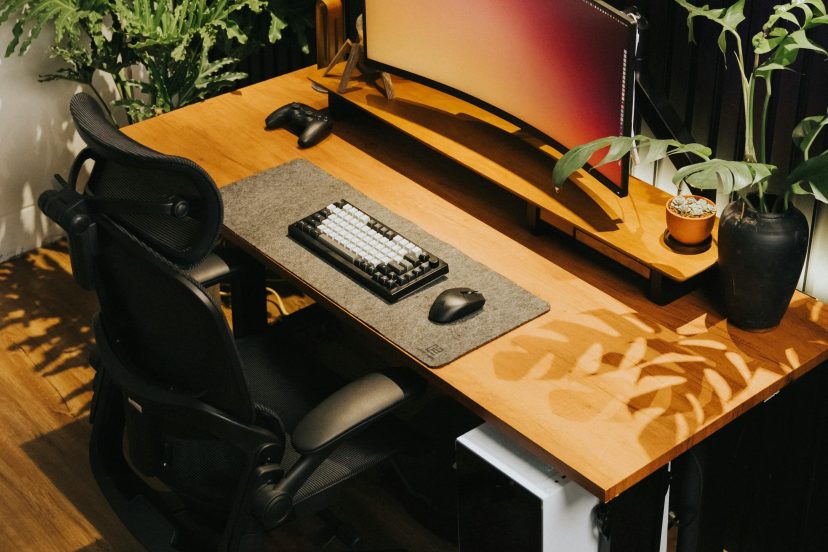
A comfortable, well-designed chair forms the backbone of any ergonomic workspace. Choose one with adjustable lumbar support, seat height ranges and that is made from breathable material. A proper chair helps maintain your spine’s natural curve, reduces pressure on your lower back, and makes long workdays feel far less taxing.
2. Adjustable Standing Desk
Standing desks give you the flexibility to alternate between sitting and standing during your workday. This not only enhances circulation and alleviates back strain but can also give your energy levels a nice boost. Adjustable desks are particularly great because they accommodate various heights and working styles, making them a fantastic addition to any office setup.
3. Ergonomic Keyboard
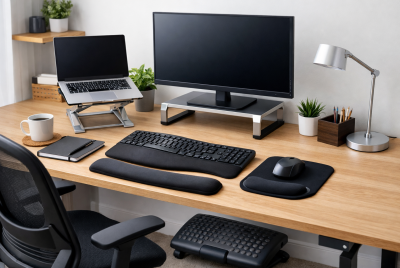
Standard keyboards can put extra strain on your wrists during long typing sessions. An ergonomic keyboard, especially a split or curved design, keeps your wrists neutral. This can prevent strain and repetitive stress injuries over time, especially for anyone who types for several hours each day.
4. Ergonomic Mouse
A vertical or contoured mouse supports the natural position of your hand and wrist. This reduces twisting and tension, which helps prevent wrist fatigue and discomfort during long sessions of clicking or scrolling.
5. Monitor Stand or Arm
Position your monitor so it’s at eye level to keep your neck comfortable. Adjustable monitor stands or arms let you position your screen exactly where it needs to be. Proper placement reduces tension in the neck and shoulders and encourages a more upright posture.
6. Foot Rest
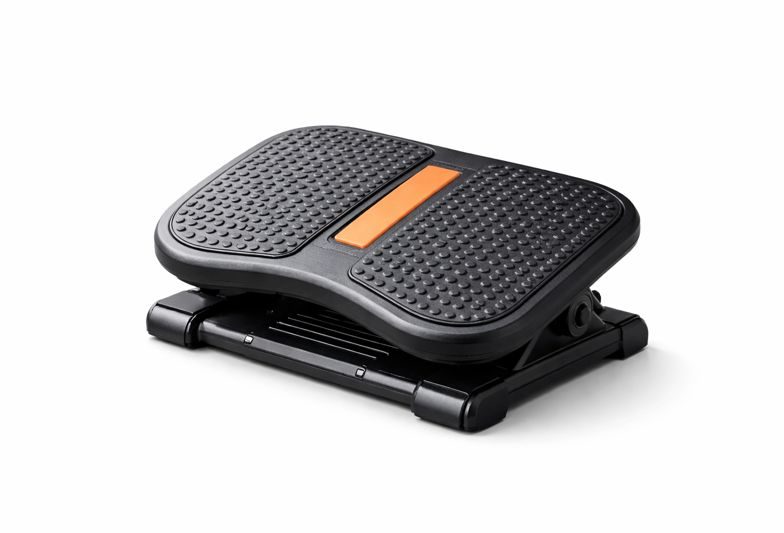
If your feet don’t naturally rest flat on the floor, a foot rest can make a big difference. It helps align your legs, improves circulation, and takes pressure off your lower back, making sitting more comfortable for long periods.
7. Lumbar Support Cushion
Not every chair has built-in lumbar support. A memory foam cushion or ergonomic pillow can maintain the natural curve of your spine and reduce lower-back discomfort. Many office workers feel immediate relief after using one of these cushions.
8. Wrist Rest
Wrist rests support your hands while typing or using a mouse. They help prevent bending your wrists at awkward angles and reduce pressure on tendons. It’s a subtle addition, but it can make a big difference for daily comfort.
9. Desk Lamp with Adjustable Brightness
Proper lighting reduces eye strain and headaches. An adjustable desk lamp allows you to control brightness and direction so your eyes stay comfortable, especially during late afternoons or work sessions in dim lighting.
10. Ergonomic Reading Chair
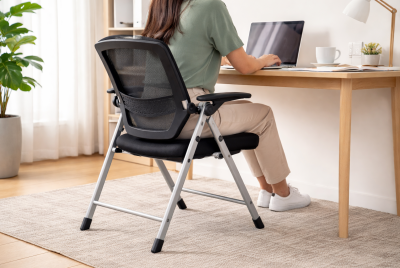
Not all work happens at a desk. Reading, brainstorming, or reviewing documents often requires a different space. A comfortable ergonomic reading chair provides full-body support while encouraging relaxed posture. For some excellent options, check out this guide on ergonomic reading chairs.
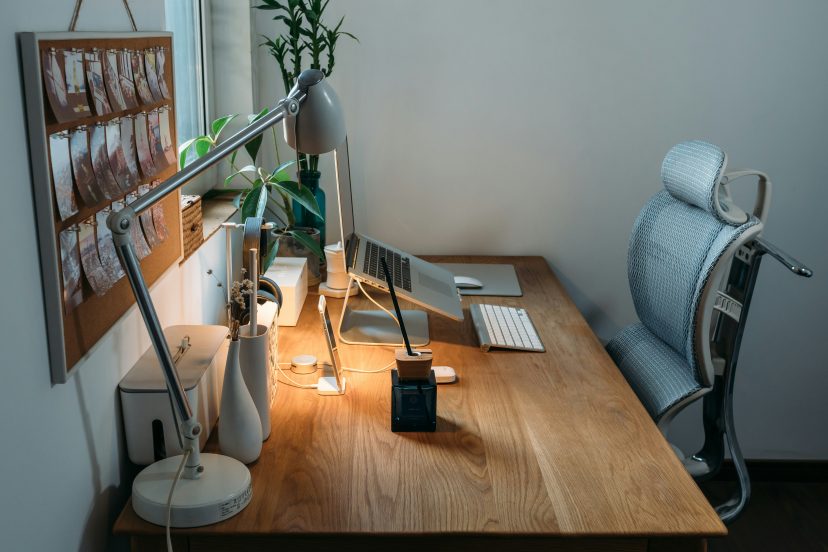
Why Ergonomic Workstations Work Better When Used Correctly
Scientific research shows that ergonomic work setups do more than make you comfortable—they actually reduce health risks. A Cochrane Systematic Review on workplace interventions for reducing sitting found that sit-stand desks significantly cut daily sitting time, in some cases by up to two hours. These desks help reduce prolonged static posture, which is a major contributor to lower back and neck pain.
Another study, a randomized controlled trial in Applied Ergonomics, examined the effects of combining ergonomic training with sit-stand workstations. Participants reported reduced musculoskeletal discomfort and visual strain, and researchers emphasized that ergonomic equipment is most effective when used correctly and paired with proper training.
Harvard Health Publishing also highlights that supportive furniture and proper posture can reduce fatigue and improve focus. Taken together, these findings show that investing in ergonomic office supplies works best when you understand how to use them properly. Small adjustments to your setup and posture can have a big impact over time.
How to Choose the Right Ergonomic Office Supplies
Choosing the right ergonomic office supplies starts with identifying where you feel the most discomfort. Is it your back, neck, or wrists? Once you know the problem, focus on products designed to address it.
- Prioritize adjustability – Choose chairs, desks, and accessories that can adapt to your body, like adjustable lumbar support, armrests, and keyboard angles.
- Start with the most impactful items – Begin with a chair or keyboard to relieve the main discomfort, then gradually add items like a footrest, wrist support, or monitor arm.
- Consider personal preference – Everyone’s body is different. Try products when possible or read reviews to ensure they suit your needs.
Even one well-chosen upgrade can improve comfort, posture, and focus, making your workday easier and healthier.
Conclusion
Setting up a comfy, ergonomic workspace doesn’t have to be complicated. Start with a good chair or keyboard, make sure your monitor and accessories fit your body, and add a few extra tools as you go. Even small tweaks can make your day easier, more comfortable, and a lot less stressful. By the end of the day, the improvements in comfort and focus will be obvious.
FAQs
1. What are ergonomic office supplies?
They are tools and equipment designed to support natural posture, reduce strain, and make daily work more comfortable.
2. Are ergonomic office supplies worth the investment?
Absolutely. They help prevent long-term injuries, reduce daily discomfort, and boost productivity.
3. Which ergonomic upgrade should I get first?
An ergonomic chair or keyboard usually gives the most immediate benefit.
4. Can ergonomic office supplies improve productivity?
Yes. Comfort allows you to focus better and work longer without fatigue or pain.
5. Do I need a full ergonomic setup to see results?
No. Even one or two carefully chosen items can make a noticeable difference.