Best Small Ergonomic Desk for Home Office | Fit Any Space

We may earn a commission for purchases made using our links. Please see our disclosure to learn more.
A bad desk can make your entire day more difficult than it needs to be. A small ergonomic desk solves that problem without taking over your entire room. It gives you a workspace that feels good for your body while still fitting into tight layouts or shared spaces. No need for a bulky workstation to boost proper posture and better comfort. When it’s well designed, even a small desk can be a big help. Let’s take a look at some desks that are worth buying if you want your home office to really feel comfortable.
Why a Small Ergonomic Desk Makes a Big Difference
Most home offices weren’t planned. They just… happened.
A laptop on the couch. A desk squeezed beside the bed. A kitchen counter turned into a workspace.
Regular furniture isn’t designed for computer use all day. A chair that feels fine for eating dinner suddenly becomes uncomfortable after a morning Zoom call. And a standard desk may be too high, too low, or too shallow to support a healthy posture.
A small ergonomic desk takes all of that into account. It’s designed to:
- Keep your body in a natural, relaxed position
- Reduce strain on your neck, shoulders, and wrists
- Fit in tight areas without feeling cramped
The “small” part helps your space.
The “ergonomic” part helps your body.
And when both of those work together, your workday feels a whole lot better.

The Real Benefits of Using a Small Ergonomic Desk
Transitioning to a compact, ergonomically designed desk doesn’t seem like a big deal at the beginning, but the advantages become apparent quickly — particularly if you’ve been working at a setup that was never intended for your body.
Less Daily Aches
This isn’t magic. It’s simply better alignment.
When your desk height, reach distance, and workspace layout fit your body, the tiny stresses you barely notice — shoulder shrugging, leaning forward, awkward wrist angles — finally stop piling up. One randomized clinical trial published in Industrial Health found that adjusting workstation ergonomics significantly reduced neck, shoulder, and upper-back pain among office workers.
That’s exactly what a properly sized, compact ergonomic desk helps you avoid: the small strains that quietly turn into everyday aches.
Better Focus
Comfort isn’t a luxury — it directly affects how well you can think.
When your body isn’t fighting discomfort, your mind has more room to stay engaged with the task in front of you. Workers who received ergonomic workstation improvements not only reported fewer physical symptoms but also demonstrated better work habits and reduced fatigue, according to a peer-reviewed study in the Malaysian Journal of Medical Sciences.
A comfortable body supports a clearer mind.
A Cleaner, Calmer Workspace
Small ergonomic desks naturally encourage tidier setups.
Less surface space means less clutter, which often leads to a calmer atmosphere and smoother workflow. Many people find that once they switch to a compact desk, their workspace becomes more intentional — only the essentials stay, and everything has a purpose.
This kind of environment supports focus and reduces decision fatigue, especially during long workdays.
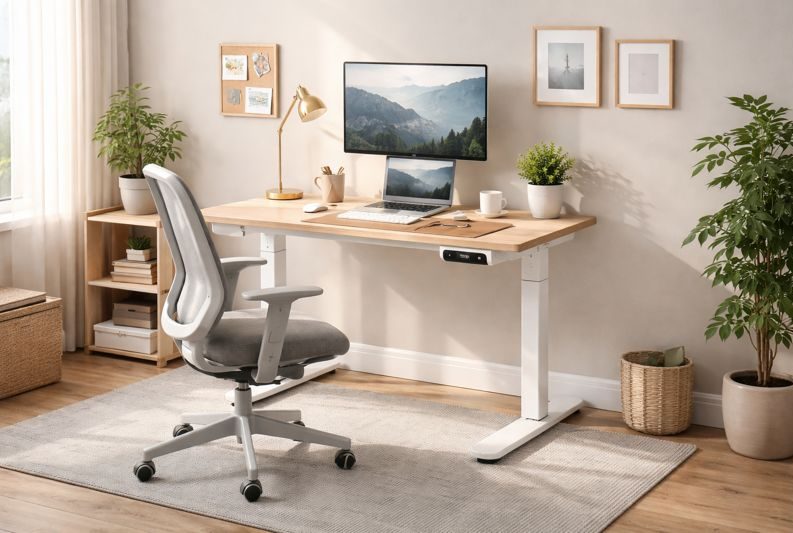
What to Look for in a Small Ergonomic Desk
Not all compact desks are created equal. Here’s what really makes one worth buying:
Adjustable Height (Electric or Manual)
Even small adjustments help you stay in a neutral posture.
If you’ve never tried a sit-stand desk, this might become your favorite feature.
Compact but Functional Surface
Small desks should still feel usable.
Look for clean layouts without bulky frames or bars that get in the way.
Quality Materials
Stability matters more than people realize.
A good small desk should have:
- Solid legs
- Reinforced joints
- A top that doesn’t flex when typing
It gives your workspace a grounded feel, which is extremely helpful when you spend hours there.
Cable Management or Storage
Even one drawer or a simple cable tray changes your entire setup. When your space looks organized, it’s easier to stay focused.
The Best Small Ergonomic Desks
Here are five popular options that consistently get high marks for comfort and durability:
1. HUANUO 32″ Small Electric Standing Desk
A compact sit-to-stand desk with 4 memory height presets and a wide adjustment range — perfect for small spaces that still need ergonomic flexibility.
2. KLSMYHOKI Portable Standing Desk
A small rolling sit-stand desk on wheels — ideal if you need mobility and flexibility in tight corners or shared spaces.
3. ERGOMAKER Electric Height Adjustable Standing Desk
A compact height-adjustable desk with sit-stand capability and modern styling. Works well in bedrooms, apartments, or multi-purpose areas.
4. Small Standing Laptop Desk with Wheels
A lightweight mobile desk that lets you switch from seated to standing work easily and move the desk where you need it.
5. Compact Work-From-Home Desk with Storage Shelves
A small ergonomic desk option with built-in storage shelves — great if you want organization without a big footprint.
Quick Summary of These Picks
| Desk | Why It’s a Good Small Ergonomic Choice |
| HUANUO 32″ Small Electric Standing Desk | Great sit-stand flexibility in a compact size |
| KLSMYHOKI Portable Standing Desk | Mobile and adjustable — perfect for multi-use rooms |
| ERGOMAKER Electric Standing Desk | Adjustable height and modern design |
| Small Standing Laptop Desk with Wheels | Lightweight and easy to reposition |
| Compact Desk with Storage Shelves | Helps keep small spaces tidy and ergonomic |
How Desk Ergonomics Affects Your Body and Your Workday
Your desk plays a bigger role in your health than most people realize.
A review from Human Factors and Ergonomics noted that proper workstation setups help reduce neck and shoulder discomfort, which are two of the most common issues among computer users.
When your desk supports your posture, you’re less likely to:
- Lean forward
- Lift your shoulders
- Overextend your wrists
- Shift nonstop trying to get comfy
That means you’re not wasting energy on discomfort—you’re using it to actually work.
Better alignment = better focus = better productivity.
How to Set Up a Small Ergonomic Desk Correctly
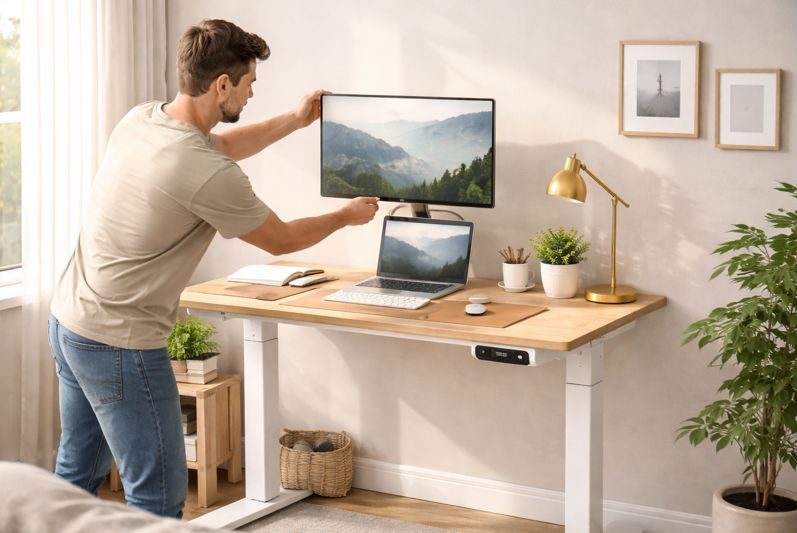
Even the best desk won’t help if the setup is off. Here’s an easy checklist to follow:
- Monitor height: Top of the screen should be at eye level
- Viewing distance: About an arm’s length away
- Keyboard placement: At elbow height, wrists straight
- Chair position: Feet flat on the ground, hips slightly above knees
- Lighting: Soft side lighting helps reduce glare and eye strain
And here’s an interesting crossover: ergonomic principles in kitchen design—like reach zones and proper surface height—actually relate closely to desk ergonomics.
When you understand how your body naturally moves, it becomes easier to design a space that supports it.
Who Should Choose a Small Ergonomic Desk?
A compact ergonomic desk is perfect if you:
- Work from home but have limited space
- Want a cleaner, more intentional workspace
- Prefer a simple setup with one monitor or laptop
- Need better posture without a huge desk dominating your room
But it might not be ideal if:
- You run three monitors
- You do drafting or design work that needs large surfaces
- You share the desk with someone who has very different needs
For most home workers, though, a small ergonomic desk hits the sweet spot.
Final Thoughts
A small ergonomic desk gives you the comfort your body needs and the space-saving design your home needs. It helps reduce everyday aches, improves focus, and turns even the smallest corners into functional, inviting workspaces. If you spend several hours a day at your desk, investing in one isn’t a luxury. It’s a smart, long-term upgrade that pays you back with better comfort and fewer distractions.
FAQs
1. What size counts as a small ergonomic desk?
Usually between 36 and 48 inches wide, with enough depth for a monitor and keyboard.
2. Can a compact desk still be comfortable?
Absolutely. Ergonomics is about posture and alignment—not size.
3. Do I need a standing desk for good ergonomics?
Not always, but having the option to switch positions is helpful.
4. Should I pair it with an ergonomic chair?
Yes. The desk and chair work together to support your body.
5. How long until I feel the difference?
Many people notice improvements in comfort within a week.