5 Ergonomic Footrests That Reduce Leg & Back Strain
We may earn a commission for purchases made using our links. Please see our disclosure to learn more.
If you’ve ever stood up after a long day at your desk and felt tightness in your legs or a dull ache in your lower back, your feet might be part of the problem. When they don’t rest properly on the floor, your posture shifts, your pelvis tilts, and your spine quietly takes on extra strain. Well-designed ergonomic footrests supports your feet at the right height and angle, helping your hips and lower back stay in a more natural position. Let’s take a closer look at how these simple tools reduce leg and back strain, what features actually matter, and which options are worth considering if you spend hours sitting each day.
Why Ergonomic Footrests Matter More Than You Think
You might assume your chair does all the work. It doesn’t.
Your lower body plays a major role in spinal alignment. When your feet dangle or barely touch the floor, your thighs press into the seat edge. That pressure restricts circulation. At the same time, your pelvis tilts backward.
As a result, your lower spine flattens. Muscles overcompensate. Tension builds.
Interestingly, research on computer users shows that when people use a footrest, they naturally make better contact with their chair’s backrest and shift their pelvic position in a way that changes spinal alignment during tasks. In other words, supporting your feet can directly influence how your spine behaves while you sit for long periods.
Similarly, studies on prolonged standing have found that using a foot support can reduce the worsening of lower back discomfort over time, suggesting that elevating or stabilizing the feet helps manage strain under static postures.
An ergonomic footrest corrects this chain reaction. It raises your feet to a natural position and supports your legs evenly. It keeps your hips aligned. And because everything lines up properly, your back works less.
Small support. Big impact.
If you’re building a healthier workstation, you can explore more complete ergonomic solutions to ensure your entire setup works together.
How Foot Position Affects Your Spine and Circulation
Let’s break this down simply.
When your feet are fully supported on a stable surface, your lower body stays properly aligned.:
- Your knees should bend comfortably at roughly a right angle.
- Your hips remain neutral.
- Your spine holds its natural curve.
However, when your feet lack support:
- Your thighs compress against the chair.
- Blood flow slows behind your knees.
- Your lower back absorbs extra strain.
Research in occupational ergonomics shows that supported lower limbs reduce musculoskeletal discomfort during prolonged sitting. In addition, posture studies consistently link proper lower-body alignment to reduced lumbar fatigue.
In other words, your feet influence your back more than you think.
What to Look for in Ergonomic Footrests
Not all ergonomic footrests work the same way. Some are soft. Others are firm. Some tilt. Others stay fixed.
Here’s what actually matters.
Adjustable Height and Angle
Your body is unique. Therefore, your footrest should adjust to your height and desk setup. Look for models with multiple height options or tilt settings. Even small changes improve comfort.
Stability
A footrest that slides around defeats the purpose. Choose one with a non-slip base or rubber grips.
Surface Texture
Some people prefer a smooth surface. Others like textured tops for gentle foot stimulation. Rocking designs encourage subtle movement, which can improve circulation.
Material
Foam feels soft and supportive. Wood feels firm and grounded. Plastic often allows tilt movement.
There’s no single best material. It depends on your preference and working style.
Now, let’s look at five top-performing options.
5 Best Ergonomic Footrests
Each of these ergonomic footrests offers something slightly different. The best one for you depends on how you sit and what kind of support you prefer.
1. BlissTrends Adjustable Memory Foam Foot Rest
If comfort is your top priority, this one stands out.
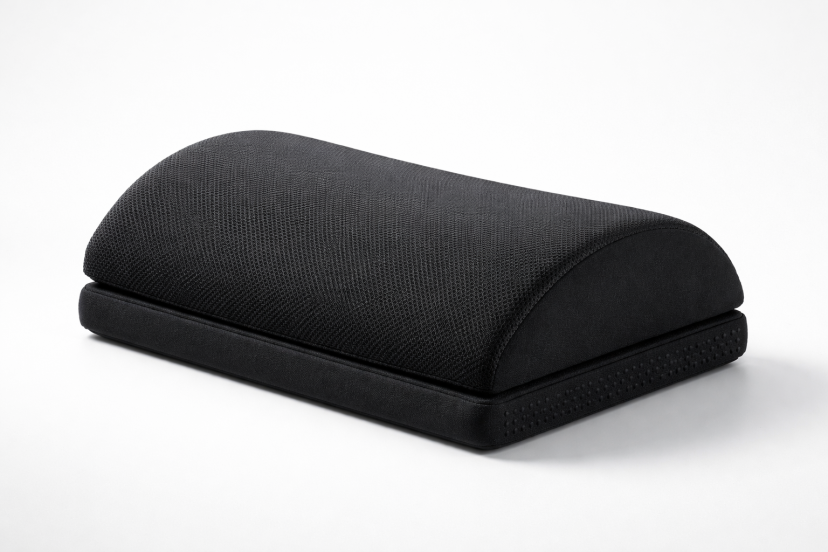
The BlissTrends footrest uses high-density memory foam that feels supportive without being too soft. It includes a removable bottom layer, allowing you to adjust the height depending on your desk setup.
Why it stands out:
- Adjustable two-layer design
- Supportive memory foam core
- Removable, washable cover
- Lightweight and easy to reposition
This model works well if you want cushioned support that still keeps your posture stable.
2. Adjustable Under Desk Footrest with Massage Surface
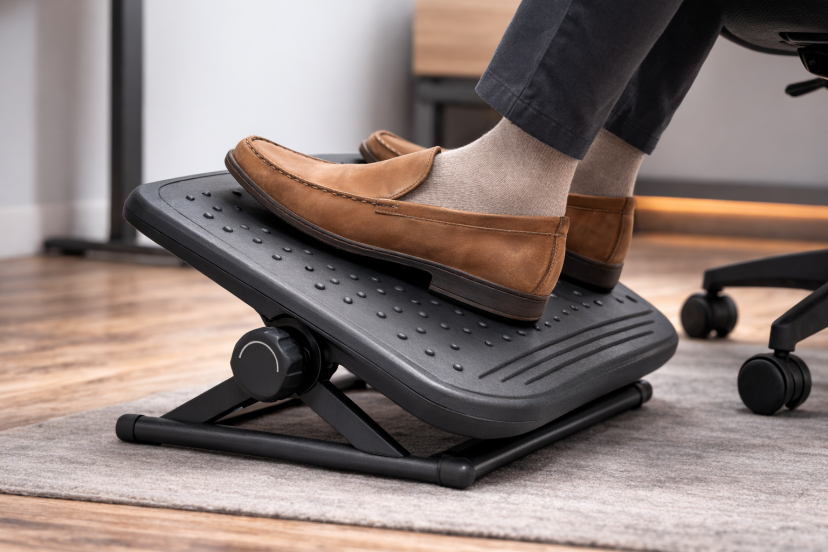
If you prefer movement while you work, this footrest offers gentle rocking functionality.
The textured surface provides light foot stimulation, while the adjustable angle supports different sitting positions. It’s especially helpful for people who shift often throughout the day.
Key features:
- Adjustable tilt design
- Rocking motion for active sitting
- Textured surface for circulation support
- Non-slip base for stability
For users who don’t like staying in one fixed position, this option keeps things dynamic.
3. ComfiLife Premium Under Desk Foot Rest
The ComfiLife footrest focuses on balanced support and durability.
Made with high-density foam, it maintains its shape over time and provides steady elevation for better hip and knee alignment. It also comes with a removable, washable cover that makes cleaning quick and simple.
Why users like it:
- Firm, supportive foam
- Adjustable height with detachable base
- Washable cover
- Stable, slip-resistant bottom
If you want a reliable everyday option that blends comfort and structure, this is a strong choice.
4. Eureka Ergonomic Adjustable Footrest with Massage Rollers
This model combines elevation with built-in foot massage rollers.
Unlike foam designs, it uses a sturdy platform with adjustable height settings. The surface encourages subtle foot movement, which may help reduce stiffness during long sitting sessions.
Highlights:
- Adjustable height levels
- Massage roller surface
- Durable, hard platform design
- Non-slip base
It’s ideal if you prefer a firm surface and enjoy light movement while seated.
5. StepLively Adjustable Foot Rest with Washable Cover
The StepLively footrest offers a soft yet structured design similar to premium foam models, but with added adjustability.
It provides supportive elevation while remaining comfortable under the feet. The removable cover makes maintenance simple.
Why it works well:
- Adjustable height
- High-density supportive foam
- Washable, removable cover
- Compact and lightweight
If you want comfort without sacrificing posture support, this one strikes a nice balance.
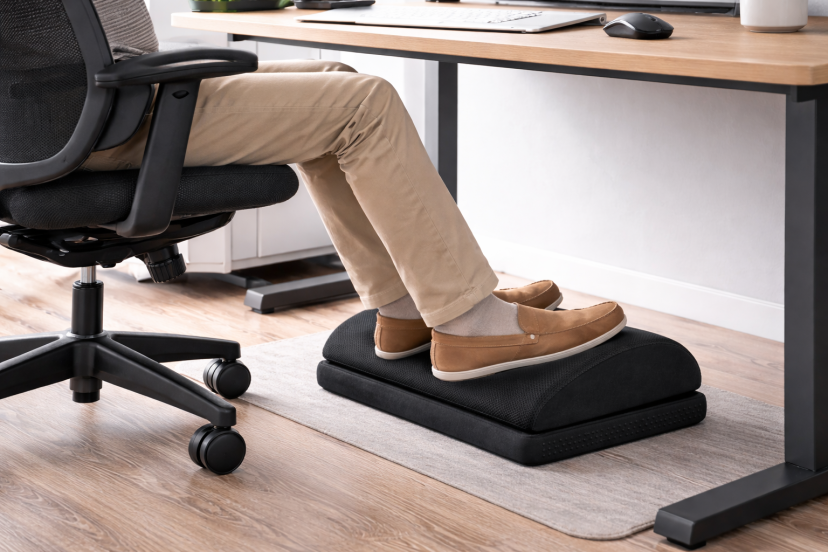
How to Set Up Your Ergonomic Footrest Correctly
Even the best ergonomic footrests won’t help if positioned incorrectly.
Follow these steps:
- Adjust your chair height first. Your hips are ideally positioned just a bit higher than your knees.
- Place the footrest directly under your knees. Your feet should rest flat and fully supported.
- Check your upper body alignment.
- Shoulders relaxed
- Back supported
- Elbows at about 90 degrees
- Move occasionally. Even with perfect alignment, your body benefits from micro-breaks.
How you set everything up is far more important than the brand you choose.
Final Thoughts
Long hours at a desk shouldn’t leave you feeling stiff and sore by the end of the day. While big upgrades like chairs and standing desks get most of the attention, proper foot support often makes a noticeable difference. When your feet rest at the right height, your posture improves, pressure eases off your lower back, and your legs feel less fatigued. An ergonomic footrest isn’t complicated or expensive, but it can help your entire setup work better together. If you sit for most of the day, giving your feet proper support is a small change that can lead to real, everyday comfort.
FAQs
1. Do ergonomic footrests really reduce back pain?
Yes. They support proper hip alignment and reduce lumbar strain. When your pelvis stays neutral, your back works less.
2. What height should my ergonomic footrest be?
Aim for a natural bend at the knees, close to 90 degrees. Your feet should rest flat without pressure behind the knees.
3. Are rocking footrests better than fixed ones?
It depends on preference. Rocking models encourage movement. Fixed models provide steady support.
4. Can ergonomic footrests improve circulation?
Yes. By reducing thigh pressure and supporting leg positioning, they help improve blood flow during long sitting sessions.
5. Can I use a footrest with a standing desk?
Absolutely. When you switch to sitting mode, a footrest maintains proper lower-body alignment.