What Are The Best Ergonomic Sleeping Positions
We may earn a commission for purchases made using our links. Please see our disclosure to learn more.
Waking up with neck, shoulder, or lower back pain can make your whole day harder. Often, the problem is not just your mattress or pillow. It may be the way your body rests for hours each night. Ergonomic sleeping positions help keep your spine, neck, hips, and shoulders properly supported while you sleep. In this guide, you’ll learn the best sleep positions for better alignment, which positions may cause strain, and simple product choices that can make bedtime more comfortable.
Why Ergonomic Sleeping Positions Matter
Sleep should help your body recover, not leave you feeling like you wrestled a folding chair. Good sleep posture supports the natural curves of your spine. It also reduces pressure on sensitive areas like the neck, shoulders, hips, and lower back.
The CDC notes that quality sleep supports physical and emotional health, and poor sleep quality can leave people tired even after spending enough hours in bed. So, comfort is not just a luxury. It affects how well you function the next day.
Think of your sleeping position as your overnight posture. During the day, you may adjust your chair, screen, keyboard, and wrist position to reduce strain. At night, your pillow, mattress, and body position do the same job. If you also deal with wrist discomfort from work or scrolling, this guide on how to reduce wrist pain can help you build better ergonomic habits beyond bedtime.
Best Ergonomic Sleeping Position for Side Sleepers
Side sleeping is one of the most practical ergonomic sleeping positions for many people. It can feel natural, cozy, and easy to maintain through the night. However, it only works well when your spine stays fairly straight from your neck to your hips.
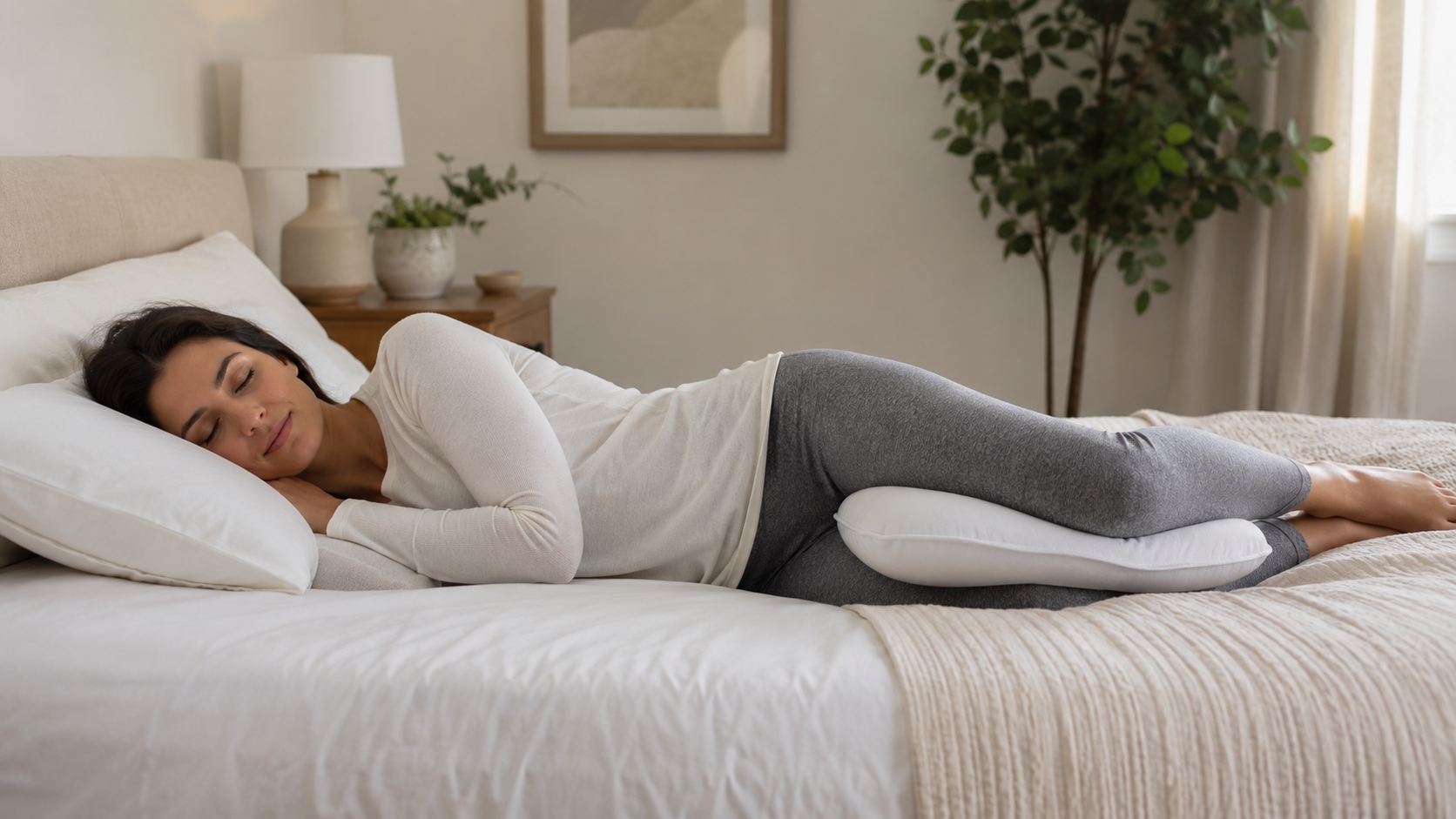
For better side sleeping posture, place a pillow between your knees. Mayo Clinic explains that slightly drawing the legs toward the chest and placing a pillow between them may help align the spine, pelvis, and hips while reducing pressure on the spine.
Here is the simple setup:
Keep your head supported with a pillow that fills the space between your ear and shoulder. Your neck should not slope down toward the mattress or tilt up toward the ceiling.
Try resting a pillow between your knees to keep your legs and hips better aligned. This helps prevent your top leg from pulling your hips forward. As a result, your lower back can rest in a more neutral position.
Also, avoid curling into an extreme fetal position. A slight bend is fine. A tight ball can round your back and may leave you feeling stiff in the morning.
Side sleeping may be especially helpful if you dislike sleeping on your back. Still, it can bother your shoulder if your mattress feels too firm or your pillow pushes your neck out of line. If your shoulder aches, try switching sides during the night or using a mattress topper with a bit more cushion.
Best Ergonomic Sleeping Position for Back Sleepers
Back sleeping can be excellent for spinal alignment when done correctly. Your body weight spreads more evenly, and your neck, shoulders, and hips can stay balanced.
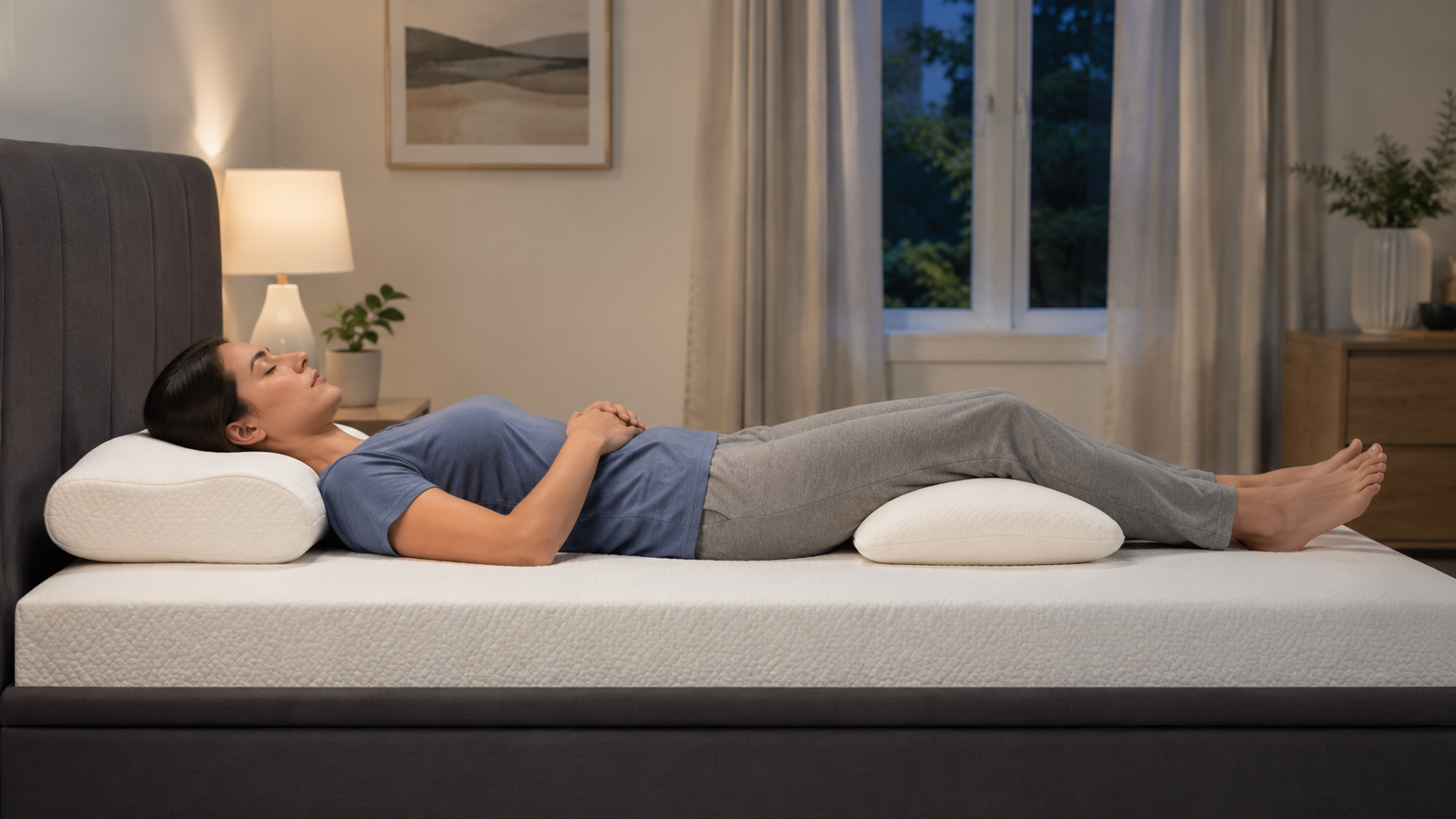
The key is knee support. Mayo Clinic recommends placing a pillow under the knees when sleeping on your back because it may relax the back muscles and help maintain the lower back’s natural curve. A small rolled towel under the waist can add support if needed.
Here is the best back-sleeping setup:
Lie flat on your back with your shoulders relaxed. Choose a pillow that holds your neck comfortably without tilting your head forward. For extra lower-back support, slide another pillow beneath your knees. Slide a pillow beneath your knees for added support. This small change can reduce tension in the lower back.
However, back sleeping does not work for everyone. Sleep Foundation notes that back sleeping can worsen snoring, sleep apnea, or acid reflux for some people. It may also feel uncomfortable for certain types of back pain.
So, listen to your body. If back sleeping makes breathing harder or increases discomfort, side sleeping may suit you better.
Should You Avoid Sleeping on Your Stomach?
Stomach sleeping is usually the least ergonomic option. This position can leave your neck turned in one direction for a long stretch of time. It can also pull your lower back into an awkward curve, especially if your mattress allows your hips to sink too deeply.
Mayo Clinic says stomach sleeping can be hard on the back and suggests trying other positions when possible. If you cannot sleep any other way, placing a pillow under the hips and lower stomach may reduce back strain.
Sleep Foundation also notes that stomach sleeping provides the least back support and may increase pressure on the spine. Because the head usually turns to one side, the neck and spine can fall out of alignment.
If you are a loyal stomach sleeper, do not panic. Start with small changes. Use a very thin pillow under your head or skip the head pillow if that feels better. You can also tuck a thin pillow beneath your hips to reduce pressure on your lower back. This can reduce the deep arch in your lower back.
Over time, you can train yourself to sleep more on your side by hugging a body pillow. It gives your body something to lean into, which makes the change feel less dramatic.
How to Choose the Right Pillow for Better Sleep Posture
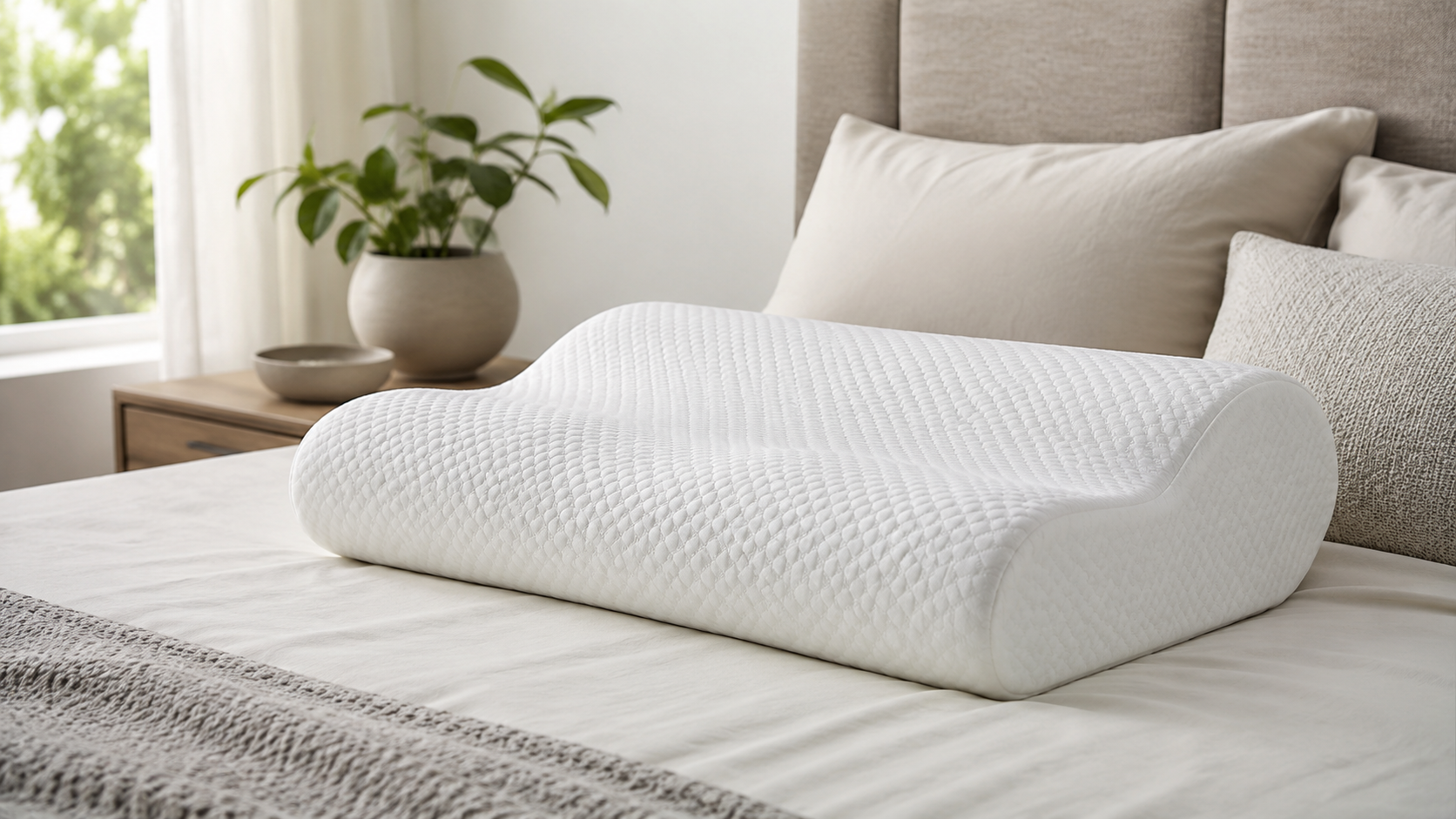
A pillow should support your neck, not just feel fluffy. When a pillow sits too tall, it can push your neck into an awkward upward angle. If it is too flat, your head drops down. Either way, your muscles may work all night when they should be resting.
A 2021 review on pillow height found that appropriate pillow height can support the head and neck, reduce cervical spine stress, and relax neck muscles.
Side sleepers often do better with a higher-loft pillow that supports the space between the head and shoulder. Back sleepers often need a lower or medium-loft pillow that supports the curve of the neck without lifting the head too high. People who sleep on their stomachs typically need a very low pillow, or sometimes no pillow at all.
Pillow material also matters. Memory foam, latex, water-based pillows, and adjustable-fill pillows can all work, depending on your comfort needs. The goal is not to buy the most expensive pillow. The main aim is to let your neck rest in a straight, natural line with the rest of your spine.
Best Products to Support Ergonomic Sleeping Positions
The right product can make ergonomic sleeping positions easier to maintain through the night. These top picks support different sleep needs, from neck alignment to hip and lower-back comfort.
EPABO Contour Memory Foam Pillow
This contour pillow works well for people who need extra neck support. It can help back and side sleepers keep the neck in a more neutral position.
Everlasting Comfort Memory Foam Knee Pillow
For side sleepers, adding a knee pillow is an easy way to improve comfort and support. It fits between the knees and helps keep the hips stacked. This may reduce twisting through the pelvis and lower back, especially if you often wake up feeling stiff.
Snuggle-Pedic Body Pillow
A full-body pillow can help side sleepers support the knees, arms, and torso at the same time. It is also useful for combination sleepers who tend to roll forward during the night.
Memory Foam Wedge Pillow
A wedge pillow can support elevated back sleeping. It may help people who prefer sleeping slightly upright or need extra upper-body elevation.
Amazon Basics Down Alternative Pillow
A simple down-alternative pillow can work well for back sleepers who want soft support without a high loft. It is a good option for people who do not like the firmer feel of contour pillows.
Conclusion
The best ergonomic sleeping positions are the ones that keep your spine, neck, hips, and shoulders supported without forcing your body into a stiff pose. For many people, side sleeping with a pillow between the knees or back sleeping with a pillow under the knees offers the best balance of comfort and alignment. Stomach sleeping tends to create more strain, but small pillow adjustments can make it less stressful if you are not ready to switch. In the end, your body gives the clearest feedback. If you wake up looser, calmer, and less achy, your sleep setup is moving in the right direction.
FAQs
1. What is the best ergonomic sleeping position?
The best ergonomic sleeping position is usually side sleeping with a pillow between the knees or back sleeping with a pillow under the knees. Both positions can help support spinal alignment and reduce pressure.
2. Can sleeping on your side help ease back pain?
Side sleeping can help back pain when your hips and knees stay aligned. Placing support between your knees can help prevent the upper leg from twisting your hips out of line.
3. Is sleeping on your back better than sleeping on your side?
Back sleeping can support even weight distribution, but it is not best for everyone. Side sleeping may work better for people who snore, have sleep apnea, or feel uncomfortable on their back.
4. Why does my neck hurt after sleeping?
Neck pain after sleeping often comes from poor pillow height, weak support, or a twisted sleeping position. Your pillow should support your head so your neck stays level with your upper body and spine.
5. Can a pillow really improve sleep posture?
Yes, the right pillow can improve sleep posture by supporting your neck, knees, hips, or lower back. However, it should match your sleeping position and body shape.