7 Ergonomic Wearables for Posture Support
We may earn a commission for purchases made using our links. Please see our disclosure to learn more.
Sitting for hours can make your shoulders round, your neck tighten, and your back feel tired before the workday is over. That is why ergonomic wearables are becoming useful tools for people who want better posture support without completely changing their routine. From smart posture trainers to supportive braces and wrist wearables, these devices can help you notice poor habits, reduce strain, and work more comfortably throughout the day.
What Are Ergonomic Wearables?
Ergonomic wearables are devices or supportive products you wear on your body to improve posture awareness, reduce strain, or support healthier movement. Some use sensors and vibration alerts. Others use straps, braces, or compression to guide your shoulders, back, neck, or wrists into a better position.
Modern posture wearables often focus on feedback. Instead of forcing your body into one stiff pose, they remind you when you start slouching. That matters because “perfect posture” all day is not realistic. Your body needs movement, not statue mode.
OSHA explains that ergonomics means fitting the job to the person, which can help reduce muscle fatigue and work-related musculoskeletal disorders.
Why Posture Support Matters at Work
Poor posture usually starts small. You lean toward the screen. Your chin moves forward. Your shoulders round. Then your back, neck, and wrists begin taking the load.
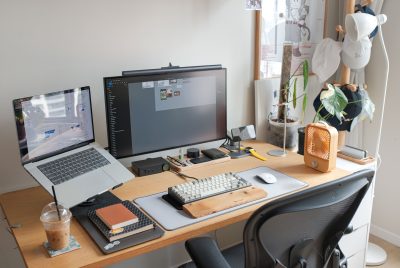
Mayo Clinic notes that chair height, screen placement, desk setup, and body position all affect comfort during computer work. That means a wearable can help, but it works best when your whole workspace supports you too.
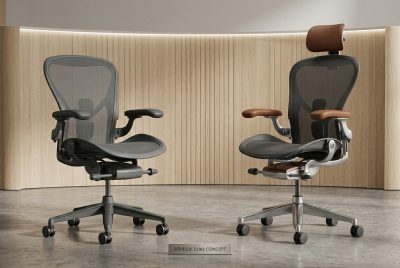
For example, if your chair offers weak lower-back support, a wearable may remind you to sit taller, but your body still has to fight the chair. In that case, pairing posture wearables with better seating support makes more sense.
7 Ergonomic Wearables for Posture Support
1. Smart Posture Trainers
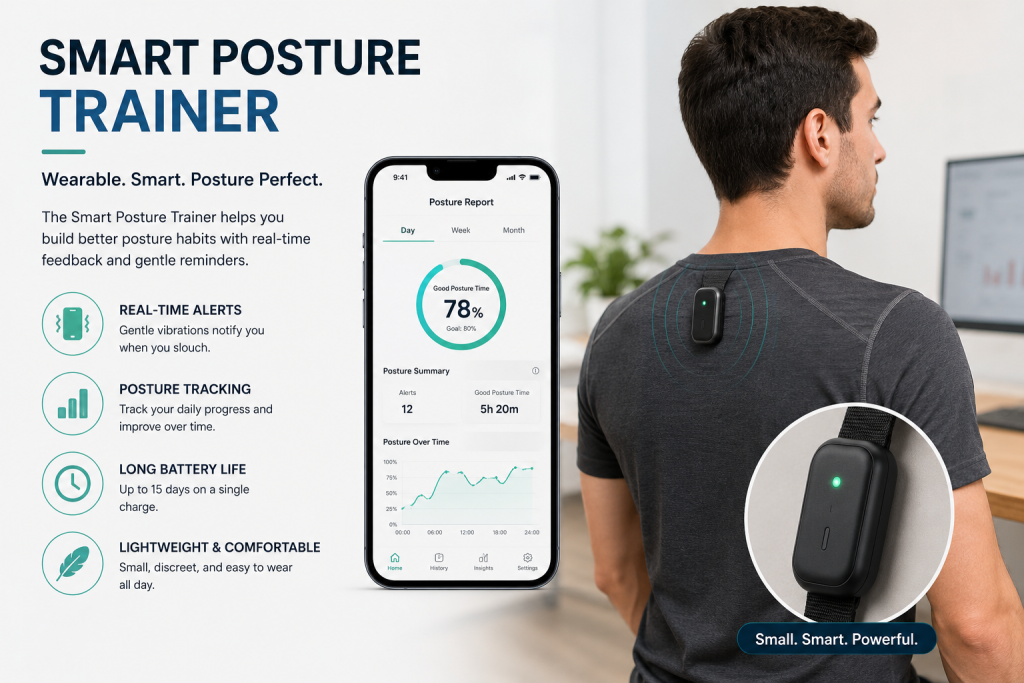
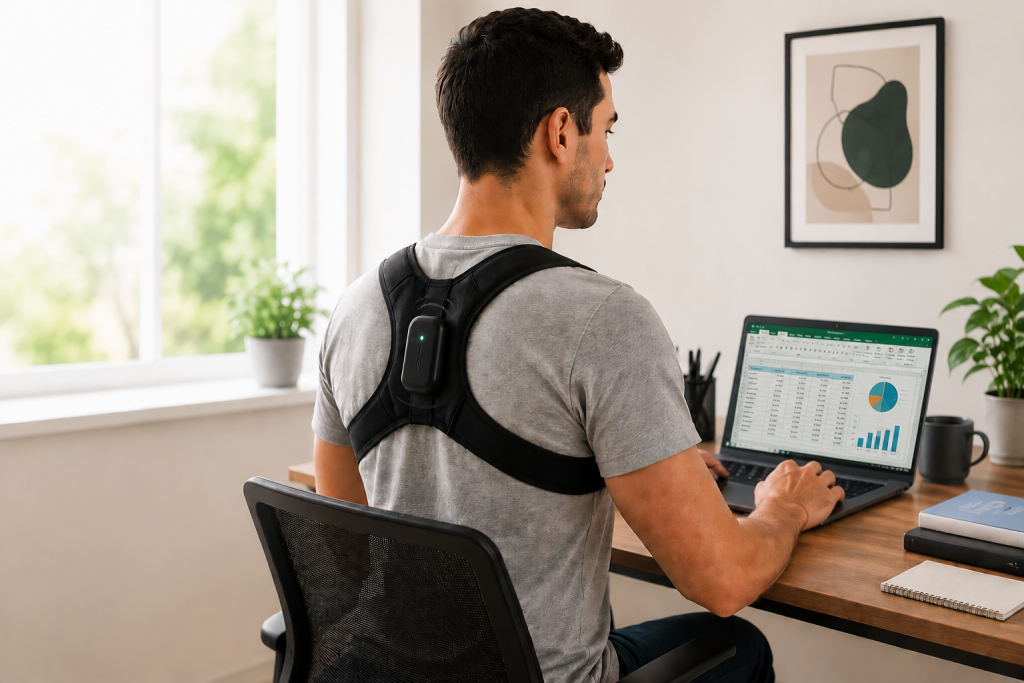
Smart posture trainers are small sensor-based devices that attach to your upper back, neck area, or clothing. When you slouch beyond your set posture angle, they vibrate gently.
The best part? They train awareness. You start noticing the exact moments you collapse into your chair, hunch over your keyboard, or lean into your laptop like you are decoding a secret message.
These are best for desk workers who want active reminders without wearing a bulky brace.
2. Posture Corrector Braces
Posture corrector braces use adjustable straps to guide your shoulders back. They are simple, affordable, and easy to find.
However, they should not feel like armor. A good brace supports alignment without pulling too hard. If it digs into your armpits, restricts breathing, or makes your shoulders sore, it is not the right fit.
Use posture braces for short sessions at first. Try 20 to 30 minutes while working, then increase slowly if your body feels comfortable.
3. Ergonomic Back Support Belts
Back support belts can help workers who stand, lift, commute, or move around during the day. They usually wrap around the lower back and abdomen to provide extra support.
These are not just for warehouse or trade work. Some office workers use lightweight lumbar belts during long travel days, conferences, or standing desk sessions.
Still, do not rely on a belt forever. Your core muscles matter. Use the belt as support, not a replacement for movement and strengthening.
4. Wearable Neck Posture Sensors
Forward head posture is common for laptop users. Your head drifts forward, your neck works harder, and your upper back tightens.
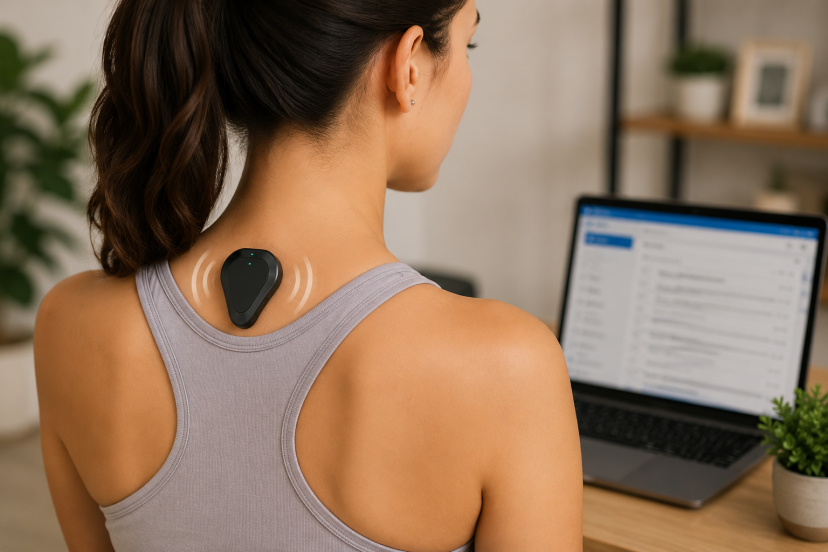
Wearable neck posture sensors focus on head and neck alignment. Some clip to clothing. Others sit near the upper spine. When your head dips forward too long, the device alerts you.
One workplace study found that participants using a wearable posture sensor had lower neck flexion angles and reduced gravitational moments on the neck during office tasks.
5. Compression Posture Shirts
Posture shirts look like athletic tops, but they include tension panels that encourage better shoulder and upper-back positioning.
They are less obvious than a brace, which makes them useful for people who want posture support at work without wearing visible straps. They can also feel more natural because the support spreads across the torso.
Choose breathable fabric. If you run warm, skip thick compression garments that make you uncomfortable after one hour.
6. Wearable Posture Reminder Clip
A wearable posture reminder clip is a small device that attaches to your shirt, collar, or bra strap. It gently alerts you when you start to slouch, helping you notice poor posture before it turns into neck, shoulder, or back tension.
This type of ergonomic wearable works well for office workers who want posture support without wearing a bulky brace. It does not force your body into position. Instead, it trains you to recognize when your shoulders round forward or your upper body starts leaning toward the screen.
7. Shoulder Support Compression Wearable
A shoulder support compression wearable gives light support around the shoulders, upper back, and chest area. It is usually softer and less noticeable than a traditional posture corrector, making it easier to wear during work, errands, or short daily routines.
This option can help people who often feel their shoulders rolling forward during desk work. It encourages better posture awareness while still allowing natural movement, which makes it a practical choice for long workdays.
How Ergonomic Wearables Fit Into Your Daily Work Routine
Ergonomic wearables work best when they support your routine instead of complicating it. You can wear a posture trainer while answering emails, use wrist support during long typing sessions, or try a posture brace for short periods when you notice your shoulders rounding forward.
The goal is not to stay stiff all day. Instead, these tools help you notice poor habits sooner, so you can adjust before discomfort builds. For better results, pair them with simple changes like raising your monitor, taking movement breaks, and using a supportive lumbar support pillow during long sitting hours.
Over time, small reminders can turn into better posture habits.
How to Choose the Right Ergonomic Wearable
Start with your main problem.
If you slouch at your desk, choose a smart posture trainer. If your shoulders round forward, try a posture brace or posture shirt. If your lower back feels tired, consider a lumbar belt or better chair support. If your wrists ache after typing, look at wrist wearables and your mouse setup.
Comfort should come first. A wearable you hate wearing will end up in a drawer. Look for adjustable sizing, breathable material, easy cleaning, and simple setup.
Also, avoid wearing supportive braces all day unless a health professional tells you to. Your body still needs to build strength and move naturally.
Final Thoughts
Ergonomic wearables can make a real difference when you use them wisely. They remind you to sit taller, move more often, relax your shoulders, and stop ignoring the small warning signs your body sends during long workdays. Still, the best results come from combining wearables with smart workstation setup, regular movement, and proper back support. Start with the area that bothers you most, choose a comfortable product, and let it become a gentle daily cue toward better posture.
FAQs
Are ergonomic wearables worth it?
Yes, they can be worth it if you struggle with posture awareness. They work best as reminders, not permanent fixes.
Can posture correctors fix bad posture?
They can help you notice and reduce slouching, but they do not “fix” posture alone. Movement, strength, and better ergonomics matter too.
How long can I use an posture corrector?
Begin with brief wearing periods, around 20 to 30 minutes at a time. Increase slowly if it feels comfortable.
Are smart posture trainers better than braces?
Smart trainers are better for awareness. Braces are better for physical support. The best pick depends on your posture goals, comfort level, and daily work habits.
What is the best ergonomic wearable for office workers?
For most desk workers, a smart posture trainer or lightweight posture corrector is a practical starting point.