10 Easy Desk Exercises to Stay Active at Work
We may earn a commission for purchases made using our links. Please see our disclosure to learn more.
A desk job can be surprisingly hard on the body. You may spend most of the day sitting still, yet by late afternoon your neck feels tight, your shoulders feel heavy, and your legs feel as if they have been ignored for hours. I have had workdays where I barely left the chair, only to stand up and realize my body felt more tired from stillness than from movement. That is where desk exercises can make a real difference. You do not need workout clothes, a quiet room, or a long break in your schedule. A few intentional movements between emails, calls, and focused work sessions can help your body change position and avoid staying locked into the same posture for too long.
The exercises below are simple enough to fit into an ordinary workday, even if your calendar is full. Move only through a range that feels comfortable, breathe normally, and stop if you notice sharp pain, dizziness, numbness, or any symptom that feels unusual for you.
Why Desk Exercises Are Worth Doing
Long periods of sitting are part of modern desk work, but that does not mean your body handles them well. When you stay in one position for too long, your muscles receive fewer chances to contract, your joints move less often, and small areas of tension can gradually build throughout the day.
Research continues to support the value of interrupting sedentary time. A 2024 systematic review and meta-analysis of office-worker sedentary interventions reviewed 24 randomized trials involving 3,169 participants. Overall, workplace interventions reduced sitting time by about 38 minutes per workday.
Movement does not always need to look like traditional exercise, either. A recent systematic review and meta-analysis of resistance exercise in sedentary office workers found improvements in several musculoskeletal outcomes, including neck and shoulder discomfort and certain measures of strength, although the results were not identical across all studies.
A few shoulder rolls will not cure chronic pain, of course. However, when you combine regular movement, basic strengthening, and a more supportive workstation, desk exercises can become a practical part of a healthier work routine.
The Best Times to Do Desk Exercises at Work
There is no perfect schedule that works for every person or every workplace. A better approach is to connect movement to moments that already happen in your day. You might stand after a meeting, stretch while a file uploads, or do a quick posture reset before starting a new task.
You can also set a reminder every 30 to 60 minutes, especially if you tend to lose track of time while working. You do not need to complete a full routine each time. Even one or two desk exercises can help break up a long stretch of stillness.
The most effective routine is usually not the most ambitious one. It is the one that feels realistic enough to repeat, even on busy days.
10 Easy Desk Exercises You Can Do at Work
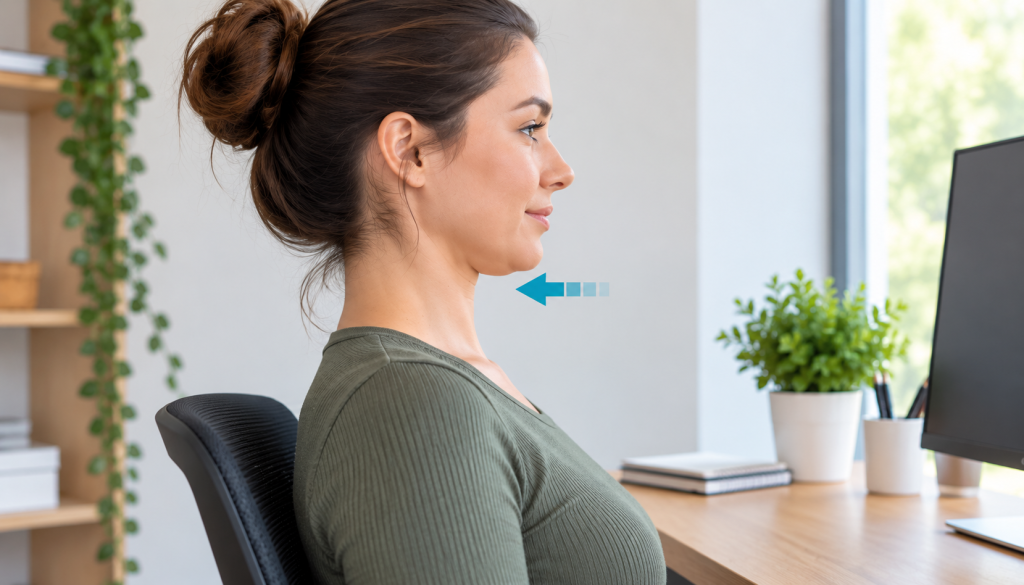
1. Chin Tucks
Sit upright and keep your gaze level, as though you are looking straight across the room. Without tilting your head upward or downward, gently draw your chin back, creating the feeling of a small double chin. Hold the position briefly, then release.
Repeat 8 to 10 times. This movement can be especially helpful after long periods of leaning toward a laptop, monitor, or phone screen.
2. Shoulder Rolls
Let your arms rest comfortably by your sides. Slowly bring your shoulders up toward your ears, roll them backward, and allow them to settle down again.
Complete 8 to 10 slow circles, then change direction. Keep the movement smooth and controlled rather than trying to force a large range. This quick reset works well when you notice your shoulders creeping upward during concentrated work.
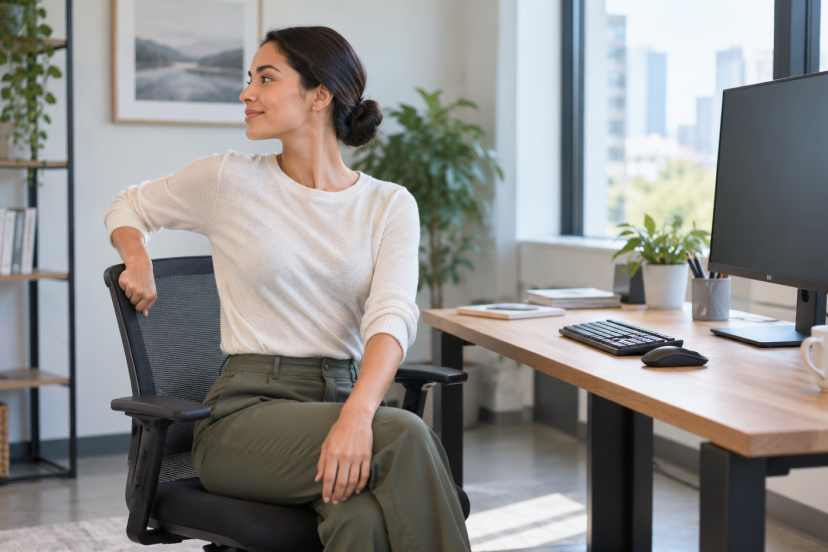
3. Seated Upper-Back Rotation
Sit near the front edge of your chair with both feet flat on the floor. Cross your arms over your chest, then gently rotate your upper body to the right while keeping your hips facing forward.
Return to the center before turning to the left. Perform the movement 5 to 8 times on both sides. The movement should feel like a comfortable rotation through the middle of your back, not a sharp twist in your lower back.
4. Wrist and Forearm Stretch
Reach one arm out in front of your body, with the palm turned downward and the elbow gently lengthened. With your other hand, gently guide your fingers downward until you feel a mild stretch along the top of your forearm.
Stay in that position for about 15 to 20 seconds, then repeat the stretch on the other side. You can also turn your palm upward and repeat the movement to stretch the opposite side of the forearm.
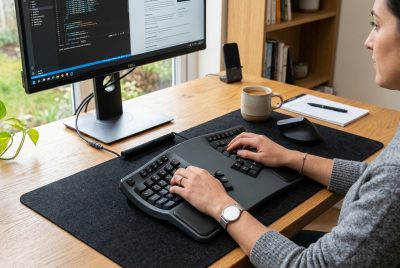
If wrist discomfort shows up regularly during your workday, your desk setup deserves attention as well. This guide explains how to reduce wrist pain with better ergonomics, including practical adjustments for your keyboard, mouse, and wrist position.
5. Seated Marches
Sit upright with both feet resting comfortably on the floor. Lift one knee a few inches, lower it, and then lift the other knee. Continue alternating as though you are marching in place from your chair.
Aim for 20 to 30 total repetitions. Keep your torso steady and avoid leaning backward as you lift each leg. This simple exercise gives your hips and legs a small burst of activity without requiring you to leave your seat.
6. Seated Leg Extensions
Sit with your back supported and both feet flat on the floor. Straighten one knee until your lower leg is roughly parallel with the floor. Pause for a moment, then lower your foot slowly and with control.
Aim for 8 to 12 controlled reps with each leg. Move smoothly and avoid snapping or locking the knee. If the movement feels too easy and you can perform it comfortably, you may add a light resistance band for a little more challenge.
7. Heel and Toe Raises
Keep both feet on the floor. Lift your heels while the balls of your feet remain planted, then lower your heels back down. After that, raise your toes while your heels remain grounded.
Alternate between the two movements for 15 to 20 repetitions. This exercise is subtle enough for meetings and gives your ankles, calves, and lower legs a useful change from staying still.
8. Glute Squeezes
Sit upright and gently tighten your glute muscles. Keep the muscles engaged for three to five seconds, then release them completely.
Repeat 10 to 15 times. Because the movement is almost invisible, it works well when you cannot stand up or move around. Keep breathing normally, and avoid tightening your entire body while you do it.
9. Chair Sit-to-Stands
Move toward the front of a stable chair and place your feet about hip-width apart. Shift your weight slightly forward, drive through your feet to rise, and sit back down slowly with control.
Do 8 to 12 repetitions. Use your hands for support if needed, especially when you are just starting. Before you begin, make sure your chair is stable and will not roll away.
10. Desk Push-Ups
Stand facing a sturdy desk that will not slide or shift. Set your hands on the front edge of the desk, a little wider than your shoulders. Walk your feet back, keep your body aligned, and bend your elbows as your chest moves toward the desk.
Push through your hands to return to the original position. Try 8 to 12 repetitions. The farther your feet are from the desk, the more challenging the movement becomes.
Make Movement Part of Your Ergonomic Setup
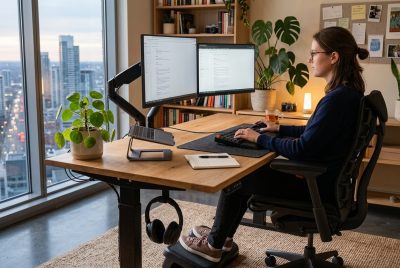
Desk exercises work best when your workstation supports your body instead of forcing you into awkward positions. Keep your screen at a height that allows you to look forward without craning your neck, and place the items you use often within easy reach.
If your monitor sits too low, too high, or too far away, review this ergonomic monitor setup guide for practical advice on height, distance, and viewing angle.
Ergonomics is less about finding one flawless posture and more about creating a setup that lets your body move naturally. A good setup gives you room to shift, stand, stretch, sit back down, and return to your work without fighting your environment.
Helpful Gear to Add More Movement to Your Workday
You can do all of the desk exercises above without equipment. Still, a few simple tools can make movement breaks more effective, more comfortable, or easier to repeat throughout the day.
1. Fit Simplify Resistance Loop Exercise Bands
These compact resistance bands can add light resistance to seated leg, hip, and lower-body exercises. They take up very little space, store easily in a desk drawer, and work well for short movement breaks at home or in the office.
2. DeskCycle 2 Under Desk Bike
The DeskCycle 2 allows you to pedal while seated, which can help you add gentle leg movement during emails, calls, or other desk-based tasks. Before buying, measure the space beneath your desk so your knees have enough clearance while pedaling.
3. OPTP The Original Stretch Out Strap
This stretching strap gives you extra reach during controlled shoulder, hamstring, leg, and upper-body stretches. It can be especially useful when your flexibility limits how comfortably you can perform certain movements.
4. Gaiam Restore Ultimate Foot Massage Roller
This compact foot roller fits easily under most desks. You can roll your feet over it while seated, adding gentle movement and giving tired feet a welcome break during the workday.
5. Ergohead Multi-Purpose Comfort Mat
Designed for standing-desk users, this contoured anti-fatigue mat gives your feet several surfaces and positions to explore. Its shape encourages small posture changes, which can help you avoid standing rigidly in one place for too long.
Conclusion
Desk exercises are useful because they are simple, practical, and easy to repeat. A minute of movement here and there may not feel dramatic, but over the course of a workday, those small breaks can help reduce the stiffness that often comes from sitting too long. Choose three or four exercises that feel natural to you and rotate through them during the day. When you combine regular movement with a supportive ergonomic setup and physical activity away from your desk, office work can start to feel less restrictive and more manageable.
FAQs
Are desk exercises actually effective?
Desk exercises can help interrupt long periods of sitting, encourage position changes, and add light muscular activity to your workday. They are not a substitute for regular exercise, but they can support a healthier routine, especially if you spend many hours at a desk.
How many times a day should I do desk exercises?
Begin with several brief movement breaks spread across your workday. For example, you might choose one or two exercises every 30 to 60 minutes. Consistency matters more than completing all 10 exercises in one session.
Can I do desk exercises if I have back or neck pain?
The right answer depends on the reason for your discomfort and how strong the symptoms feel. Gentle movement may feel helpful for some people, but exercise should not make pain worse.
If your symptoms are persistent, severe, related to an injury, or accompanied by weakness, numbness, or tingling, speak with a qualified healthcare professional before changing your exercise routine.
Do I need a standing desk to stay active at work?
No. A standing desk can make position changes easier, but it is not required. You can stand during phone calls, walk during breaks, use chair-based movements, and perform simple exercises beside a regular desk.
What are the best desk exercises for beginners?
Shoulder rolls, heel and toe raises, seated marches, chin tucks, and gentle wrist stretches are good starting points. Begin with a comfortable range of motion and a small number of repetitions. As the movements become easier, you can gradually add more repetitions or include another exercise.