5 Ergonomic Footwear Tips for People Who Stand All Day
We may earn a commission for purchases made using our links. Please see our disclosure to learn more.
Standing up all day can make your feet ache, your legs tired, and your lower back feel overworked. Breaks and stretches are helpful, but your shoes matter more than you think. The right ergonomic footwear can support your arches, cushion the impact of hard surfaces, improve your stability and reduce your daily discomfort. Here are five practical footwear tips to help you find shoes that make being on your feet all day a little bit easier and a lot more comfortable.
Why Ergonomic Footwear Matters When You Stand All Day
Foot is the base of your whole body. Poor shoe support can affect more than your feet. Over time, it may add pressure to your ankles, knees, hips, and back.
That is why footwear matters so much for people who stand for hours. You are not just looking for “comfortable shoes.” You are looking for shoes that help your body stay supported while dealing with pressure, movement, and long periods on hard surfaces.
Workplace health experts have also raised concerns about long periods of standing. NIOSH explains that prolonged standing at work may contribute to foot discomfort, leg swelling, fatigue, and lower back pain. Standing itself is not the problem. It simply means your setup matters.
Your shoes are a major part of that setup.
Tip 1: Choose Shoes With Real Arch Support
Arch support is one of the most important features in ergonomic footwear.
Your arches help spread your body weight across your feet. When your shoes lack support, your feet may roll inward, your ankles may work harder, and your knees may absorb more stress than they should.
Flat shoes can feel easy and lightweight at first, but they often fail during long shifts. After several hours, your feet may feel tired, sore, or strained because they are doing too much of the work on their own.
Look for shoes with built-in arch support that matches your foot type. Some people need neutral support. Others need extra support because of flat feet, high arches, plantar fasciitis, or overpronation.
How to check for proper support
When you try on a shoe, stand in it for a few minutes. Your arch should feel gently supported, not poked or forced upward. YYour heel should stay in place, and the shoe should hold your foot without slipping.
If the shoe feels flimsy when you twist it in your hands, it may not give you enough structure for standing all day.
Tip 2: Find Cushioning That Supports, Not Sinks
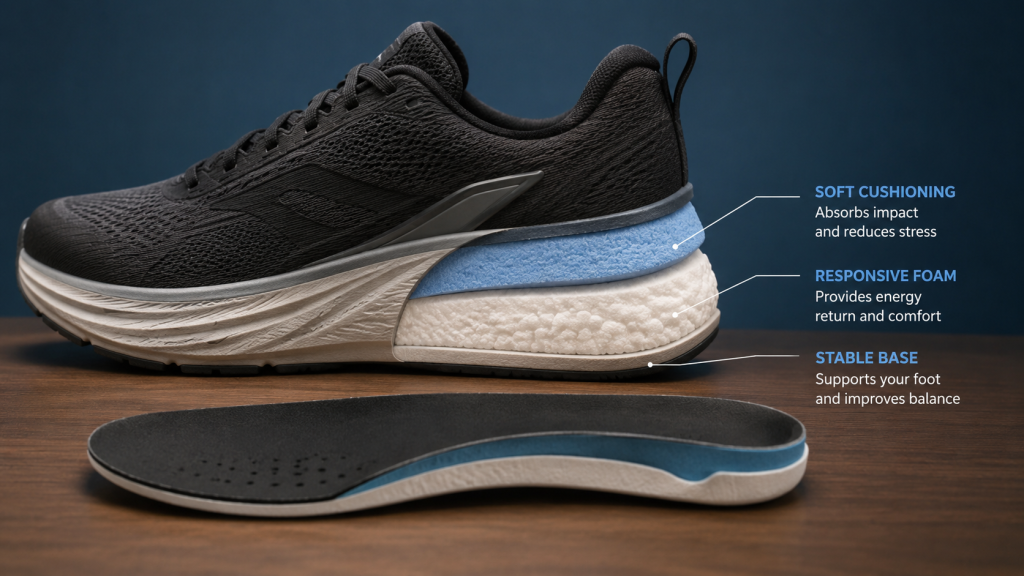
Cushioning can make a big difference, especially if you stand on concrete, tile, or commercial flooring.
However, softer is not always better.
A shoe that feels like a pillow may seem perfect in the store. But after hours of standing, overly soft shoes can feel unstable. Your feet and legs may work harder to keep you balanced, which can increase fatigue.
Good ergonomic footwear should have balanced cushioning. You want enough shock absorption to reduce pressure under your heels and forefoot, but you also need enough firmness to stay stable.
A review on occupational footwear found that supportive shoes and insoles may help reduce discomfort during prolonged standing. The review also notes that footwear design, sole firmness, and cushioning can all affect comfort and fatigue.
So, do not choose shoes based only on softness. Choose shoes that feel cushioned, steady, and supportive at the same time.
A simple test
Stand in the shoes and shift your weight from side to side. If your feet wobble or sink too much, the cushioning may be too soft for long standing days.
Tip 3: Look for a Stable Heel and Roomy Toe Box
A shoe can have good cushioning and still be uncomfortable if the shape is wrong.
Your heel should feel secure. If your heel slips while walking, your foot has to grip and adjust with every step. That can lead to rubbing, blisters, and extra fatigue.
The toe box matters just as much. When you stand, your toes need space to settle without feeling cramped. If the front of the shoe squeezes your toes, your feet may feel cramped, hot, or sore by the end of the day.
This is especially important if you have wide feet, bunions, hammertoes, or swelling after long shifts.
What to look for
Choose shoes with a firm heel counter, a wide toe box, and enough depth for your foot. Your toes should not press against the front or sides of the shoe.
Also, be careful with narrow dress shoes, high heels, and thin-soled fashion sneakers. They may look polished, but they rarely support the demands of standing all day.
If you need a professional look, search for work shoes that combine clean styling with orthopedic or ergonomic features.
Tip 4: Match Your Shoes to Your Work Environment
The best ergonomic footwear depends on where you work.
A nurse standing on hospital floors may need different shoes than a warehouse worker, teacher, hairstylist, retail associate, or restaurant server. Your floor surface, movement level, safety rules, and daily tasks all matter.
If you work on hard floors, look for strong cushioning and shock absorption. If you work on slick surfaces, slip-resistant soles should be a priority. If you lift heavy items or work around equipment, you may need safety-rated footwear.
Hard floors
Concrete and tile can be rough on your feet. Choose shoes with durable midsoles and enough cushioning to reduce repeated impact.
Slippery floors
For restaurants, hospitals, salons, and labs, slip-resistant outsoles can help reduce the risk of falls. Comfort matters, but safety comes first.
Office and standing desk setups
If you split your day between standing and computer work, think about your whole workstation. Supportive shoes help from the ground up, while proper screen height helps reduce neck and shoulder strain. You can pair better footwear with an ergonomic monitor stand for a more comfortable workstation.
Small changes work better when they support each other.
Tip 5: Rotate and Replace Your Shoes Before They Wear Out
Even the best shoes do not last forever.
The problem is that worn-out shoes often look fine on the outside. The upper may still look clean, but the midsole may already be compressed. Once cushioning and support break down, your feet absorb more stress.
If your feet suddenly feel more tired than usual, your shoes may be the reason.
Rotating between two pairs can help. It gives each pair time to decompress between shifts and gives your feet slight changes in support. This can reduce repetitive pressure in the same spots.
Signs your shoes need replacing
Replace your work shoes if you notice uneven sole wear, flattened cushioning, heel slipping, new foot pain, or less support than before.
A tired shoe cannot support a tired body. At that point, it is just along for the ride.
Recommended Products
Here are five Amazon product ideas that may work well for people who stand for long hours. Always choose based on your foot type, job requirements, floor surface, and comfort needs.
1. HOKA Bondi 8 Running Shoes
The HOKA Bondi 8 is known for its thick cushioning and rocker-style sole. It may be a good choice if you stand on hard floors and want strong shock absorption.
Best for: Healthcare workers, retail staff, teachers, and people who want maximum cushioning.
2. Brooks Ghost 16 Running Shoes
The Brooks Ghost 16 offers balanced cushioning and neutral support. It is not too soft or too firm, which makes it useful for people who want everyday comfort without a bulky feel.
Best for: People who need reliable support for walking and standing.
3. Dansko Professional Clog
Dansko Professional Clogs are popular among nurses, chefs, teachers, and other workers who spend long hours on their feet. They offer firm support, a roomy toe box, and a stable base.
Best for: Indoor work environments and people who prefer structured support.
4. Skechers Work Arch Fit SR Axtell
This work shoe combines arch support with a slip-resistant outsole. It is a practical option for workplaces where comfort and traction both matter.
Best for: Restaurants, healthcare settings, salons, and service jobs.
5. Superfeet All-Purpose Support High Arch Insoles
If your current shoes need more structure, supportive insoles can help. Superfeet insoles are designed to improve arch support and heel stability.
Best for: Upgrading work shoes that still have enough room for an insert.
Conclusion
The right ergonomic shoes can make long hours of standing feel easier. They support your arches, cushion your feet on hard floors, and help keep your body stable. This may help ease pressure through your legs and lower back. Instead of choosing shoes based only on style or softness, look for footwear that fits your foot type, work environment, and daily routine. When your feet have proper support, you can get through the day with less pain and more energy.
FAQs
1. What is ergonomic footwear?
Ergonomic footwear is designed to support your feet, improve comfort, and reduce strain during standing or walking. It usually includes features like arch support, cushioning, heel stability, and a comfortable toe box.
2. Should you wear soft shoes if you stand all day?
Soft shoes can help reduce impact, but shoes that are too soft may feel unstable. The best shoes for standing all day usually combine cushioning with firm support.
3. Should I use insoles with ergonomic shoes?
You may not need insoles if your shoes already offer proper support. However, insoles can help if your shoes feel flat, lack arch support, or need better heel stability.
4. Can running shoes work well for all-day standing?
Some running shoes work well because they offer cushioning and support. However, they may not be ideal if your workplace requires slip-resistant, waterproof, or safety-rated shoes.
5. How often should I replace shoes used for standing all day?
Replace them when the cushioning feels flat, the soles wear unevenly, your heel slips, or your feet feel more tired than usual. If you stand full-time, your work shoes may wear out faster than casual shoes.