
Do Ergonomics Pillow Really Improve Sleep?

We may earn a commission for purchases made using our links. Please see our disclosure to learn more.
Waking up with neck pain, shoulder tension, or morning stiffness could be an indication your pillow is not supporting you properly. Ergonomics pillow are intended to help with the alignment of the head, neck, and spine, but their effectiveness is influenced by sleeping position, pillow height, material, and individual comfort.
Learn about how ergonomics pillow function, what the science says about sleep quality and neck pain, and how to select the best one for you in this guide.
What Is an Ergonomic Pillow?
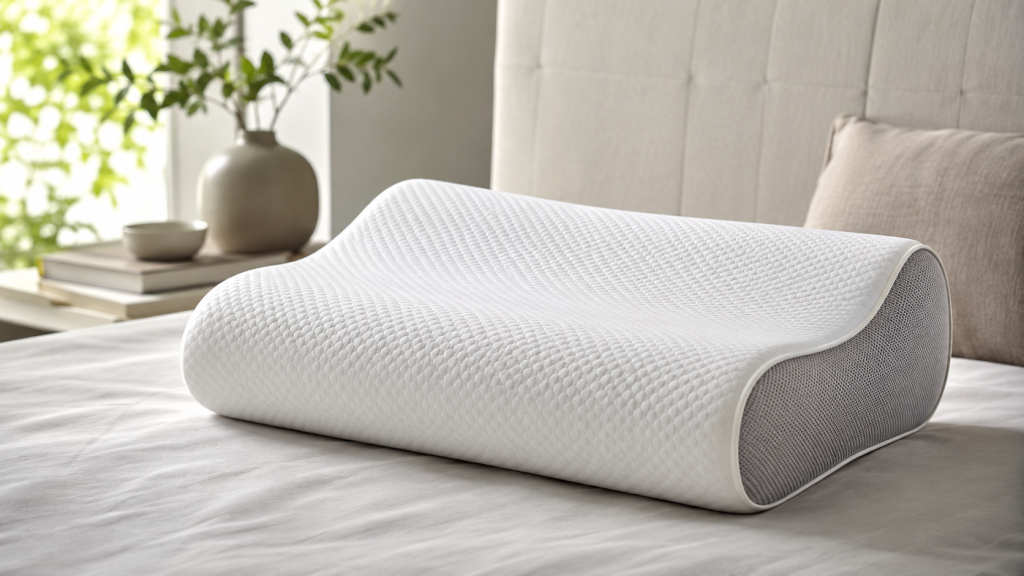
An ergonomic pillow is shaped or constructed to support the natural curves of your head, neck, and shoulders.
Unlike a traditional flat pillow, it may include raised edges, a lower center, adjustable filling, or a curved shape. Common materials include memory foam, latex, shredded foam, microfiber, and blended fills.
Some models let you add or remove filling to adjust the loft, or pillow height. “Ergonomic” is a broad marketing term, so fit matters more than the label.
Benefits of Ergonomics Pillow
1. Enhanced Neck and Spine Alignment
One purpose of an ergonomic pillow is to prevent your head from tilting too far upward, downward, or to one side.
The pillow should support a relaxed position that follows the natural curve of your cervical spine. A thick pillow may push a back sleeper’s head forward, while a thin pillow may let a side sleeper’s head drop toward the mattress.
The level of support you need depends on factors such as your build, shoulder width, mattress type, and usual sleep position.
2. Improved Sleep Quality
A supportive pillow can make it easier to find a comfortable position and may reduce nighttime repositioning.
Still, ergonomics pillow do not cure insomnia or guarantee deeper sleep. A systematic review of pillow design, neck pain, and sleep quality found that spring and rubber pillows may reduce neck pain, waking discomfort, and disability. However, the review found no significant overall improvement in sleep quality among people with chronic neck pain.
The findings suggest that pillow height and shape may improve comfort and alignment, but sleep problems linked to stress, health conditions, noise, or poor habits usually need broader solutions.
3. Reduction in Pain and Discomfort
A pillow that matches your sleeping position may reduce morning stiffness by supporting the neck and limiting awkward angles.
In a clinical trial comparing pillows for neck pain and sleep quality, 41 adults tested their usual pillow, a cervical roll, and a water-based pillow. The water-based design was linked to less morning pain, greater relief, and better self-reported sleep, although it did not improve every measure of physical disability.
This suggests that the right pillow may improve comfort for some people, but no design works for everyone. Ergonomics pillow should support healthy sleep posture, not replace medical care.
Seek medical advice if neck pain is severe, persistent, caused by an injury, or accompanied by numbness, weakness, dizziness, or pain spreading into the arms.
Choosing the Right Ergonomic Pillow
1. Consider Your Sleeping Position
Your usual sleeping position is a helpful starting point.
Side sleepers typically benefit from extra loft to keep the head level with the spine and support the space above the mattress. Broad shoulders or a firm mattress may require more loft.
Back sleepers usually do well with a medium or lower-loft pillow that supports the neck without pushing the chin toward the chest.
Stomach sleepers generally need a very thin pillow or may prefer no head pillow. A thick pillow can rotate the neck and increase strain.
Combination sleepers may benefit from an adjustable pillow that works in several positions.
Your body proportions and mattress also matter, so do not choose based on sleeping position alone.
2. Material Matters
Memory foam conforms around the head and neck. Solid foam feels structured, while shredded foam is easier to reshape. Some memory foam pillows retain heat.
Latex feels springier, returns to shape quickly, and can be durable.
Fiber-filled pillows feel softer and lighter. Adjustable blends may suit sleepers who dislike dense foam.
No material is automatically best. Comfort, loft, firmness, airflow, washability, and return policies often matter more than the filling.
3. Size and Shape
A contour or cervical pillow usually has raised edges and a lower center to support the neck.
An adjustable-fill pillow lets you add or remove filling to control the height.
A side-sleeper pillow may include a shoulder cutout or curved edge.
A wedge pillow elevates the upper body and serves a different purpose from a standard pillow. It may help with reading or sleeping with elevation, but the angle should not force your neck forward.
Always check the dimensions because some contoured pillows are smaller than standard pillows.
Caring for Your Ergonomic Pillow
1. Regular Cleaning
Follow the manufacturer’s care instructions. Many ergonomics pillow have machine-washable covers, while the inner foam should only be spot cleaned.
Choose a pillowcase that can be washed regularly, and add a protective cover if needed. After cleaning, make sure the pillow is fully dry before placing it back on the bed.
2. Replacement Schedule
There is no universal replacement schedule.
Consider replacing your pillow when it stays flat, develops permanent lumps, no longer supports your sleeping position, or causes new discomfort. A quality model may remain supportive for years, while a cheaper pillow may lose its shape sooner.
Potential Drawbacks
Ergonomics pillow are not comfortable for everyone.
A highly contoured pillow may feel restrictive if you move often during sleep. Solid memory foam can feel too firm, while adjustable pillows may need regular fluffing.
A new height or shape may feel unfamiliar for the first few nights. Mild awkwardness is normal, but increasing pain, numbness, tingling, or headaches should not be ignored.
Some foam pillows retain heat, and premium models may cost more. A useful return policy matters because comfort is difficult to predict from a product description.
How to Transition to an Ergonomics Pillow
1. Give It Time
A new pillow can feel strange during the first few nights.
Before giving up, check whether the height can be adjusted. Removing a little filling or trying the lower side of a contoured pillow may make a noticeable difference.
Give yourself several nights to assess it, but do not force yourself through significant pain.
2. Start Gradually
Try the pillow while reading or relaxing before using it for a full night. Use it consistently enough to judge whether it suits you.
Make one adjustment at a time so you can tell what is helping.
Common Myths About Ergonomics Pillow
1. One Size Fits All
A pillow marketed for side sleepers may still be too high for a smaller person or too low for someone with broad shoulders. The best ergonomics pillow fit your body, mattress, and sleeping habits.
2. More Expensive Means Better
A higher price may reflect better materials, construction, or warranty coverage. It does not guarantee comfort.
A moderately priced adjustable pillow may suit you better than an expensive molded pillow with a fixed height. Compare loft, materials, trial periods, and return policies before buying.
Products to Consider
1. Coop Sleep Goods Original Adjustable Pillow
Adjustable memory foam and microfiber fill, a removable cover, and customizable loft.
2. EPABO Contour Memory Foam Pillow
A contoured memory foam design intended to support the head and neck.
3. Bed Wedge Pillow
A wedge-style design for upper-body or leg elevation.
4. UTTU Sandwich Pillow
A layered contoured foam design with a removable middle section for height adjustment.
5. TEMPUR-Neck Pillow
A firm, contoured memory foam pillow designed to support the natural curve of the head, neck, and shoulders.
Check current measurements, materials, and return policies before ordering.
Conclusion
Ergonomics pillow can improve comfort, support healthier neck alignment, and reduce morning stiffness for some sleepers, but the results depend on choosing the right fit. Your sleep position, body shape, mattress firmness, preferred material, and pillow height all matter more than the label alone. The best ergonomic pillow is not necessarily the most expensive or highly contoured option; it is the one that keeps your head and neck comfortably supported throughout the night. By focusing on fit, adjustability, and realistic expectations, you can make a more informed choice and create a sleep setup that feels better for your body.
FAQs
1. Can ergonomics pillow help with snoring?
Possibly, but they are not a cure. A wedge or side-sleeping pillow may help some people maintain a more open airway. Persistent snoring, gasping, or daytime sleepiness warrants medical advice.
2. Are ergonomics pillow good for kids?
They may suit some older children when properly sized. Infants should not sleep with pillows or other soft items in their sleep space.
3. How much should I expect to pay for a quality ergonomic pillow?
Prices vary. Prioritize suitable height, supportive materials, washable components, and a useful return period.
4. Can I use an ergonomic pillow if I have allergies?
Yes, but check the complete material list. Look for a washable cover and avoid materials that trigger a known allergy.
5. What if I try an ergonomic pillow and do not like it?
Adjust the loft, filling, or orientation if possible. If it remains uncomfortable after a reasonable trial, return it if the seller allows.