10 Laptop Ergonomics Tips to Reduce Strain

We may earn a commission for purchases made using our links. Please see our disclosure to learn more.
A laptop makes it easy to work almost anywhere. Unfortunately, the compact design also creates an awkward choice: keep the keyboard at a comfortable height and look down at the screen, or raise the screen and reach up to type. After several hours, that compromise can show up as a stiff neck, tired shoulders, sore wrists, or an aching lower back. Good laptop ergonomics does not require a perfect posture or an expensive office makeover. It means arranging your equipment and work habits so your body does less unnecessary work.
Why Laptop Ergonomics Matters
An awkward position can place sustained demand on muscles and joints. A low screen, unsupported arms, repetitive trackpad use, glare, and long sessions add to the problem.
You do not need to maintain one perfectly upright position throughout the day. A supportive setup makes neutral positions easier, while regular movement prevents one position from becoming exhausting.
1. Raise the Screen Toward Eye Level
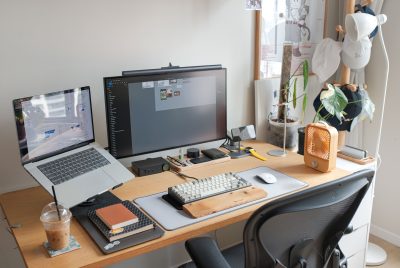
Place the laptop on a stable stand so you can view the screen without repeatedly dropping your chin toward your chest. As a starting point, position the top of the display around eye level or slightly below it. You should be able to scan most of the screen with your eyes rather than bending your neck.
Exact height depends on your body and vision. If you tilt your head back, lower the display. A firm stack of books can test the idea before you buy a stand.
2. Add an External Keyboard and Mouse
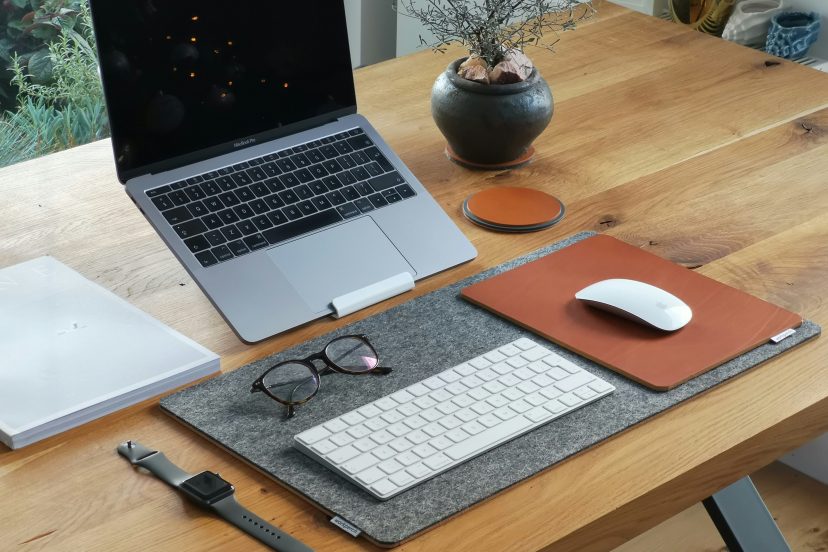
Once you elevate the laptop, stop using its built-in keyboard for long sessions. An external keyboard and mouse let you raise the display while keeping your hands near elbow height. This separation solves the basic ergonomic conflict built into a laptop.
Keep the keyboard centered in front of your body and within easy reach so your elbows remain close to your torso. If you type for hours, explore the differences among ergonomic keyboard designs rather than assuming one shape suits everyone.
3. Keep Wrists Straight While Typing
Aim for a straight line from each forearm through the hand. Avoid bending your wrists upward, sideways, or against a sharp desk edge. Lower the keyboard or adjust the chair if the keys sit too high.
Keyboard feet often tilt the back of the board upward, which can increase wrist extension. Avoid lifting the rear of the keyboard. A level position—or one that slopes gently away from you—usually keeps the hands more naturally aligned. Use a palm support during pauses if it feels comfortable, but avoid planting your wrists on it while actively typing.

4. Set a Comfortable Viewing Distance
Move the display far enough away that you can read comfortably without leaning forward. Roughly an arm’s length works as an initial check, though screen size, resolution, and eyesight affect the right distance.
Increase text size instead of pulling your face toward small content. Also clean the screen and adjust contrast. These simple changes reduce the tendency to crane your neck or narrow your eyes when reading detailed documents.
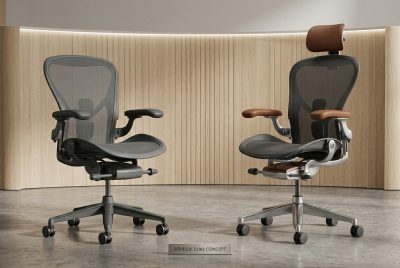
5. Adjust Your Chair Before Your Desk Accessories
Sit back so the backrest supports your lower and mid-back. Keep your shoulders relaxed, your elbows near your body, and your thighs roughly parallel to the floor. Adjust your seating so your soles have full support. If they cannot reach the ground comfortably, add a stable foot platform.
Set chair height for comfortable keyboard use first. If your feet lift off the floor afterward, add foot support. If armrests push your shoulders upward or keep you too far from the desk, lower or remove them. For more ideas, see these workstation upgrades.
6. Center the Laptop With Your Body
Place the screen and keyboard directly in front of you. A laptop positioned off to one side encourages repeated neck rotation and uneven shoulder posture. This matters especially when the laptop serves as a second screen for several hours.
If you use an external monitor as your main display, center that monitor and place the laptop beside it. When you use both equally, position them close together and center the gap between them. Turn your chair with your whole body rather than twisting from the neck.
7. Support Your Forearms Lightly
Let your forearms rest lightly on the desk or properly adjusted armrests without shrugging your shoulders. Support reduces the load on the neck and shoulder muscles, but too much pressure at the wrist or elbow can create a new problem.
Position the mouse beside the keyboard on an even surface. Reaching outward repeatedly can leave the shoulder tense and fatigued. Repeatedly reaching sideways for the mouse can tire the muscles around your shoulder.
8. Control Glare and Lighting
Place the screen at a right angle to nearby windows when possible. A window directly behind the display can create a bright contrast, while a window behind you may reflect on the screen. Both situations can make you lean, squint, or adopt an awkward viewing angle.
Match screen brightness to the room. Add a task light for paper documents, but aim it away from the display. The OSHA computer workstation guidance also recommends checking monitor placement and glare.
9. Take Short, Frequent Movement Breaks
No chair or stand cancels out hours of stillness. Every 30 to 60 minutes, change position, stand, walk briefly, or complete a task away from the screen. Short movement breaks are easier to repeat than one long stretching session at the end of the day.
A recent systematic review of sedentary behavior and neck pain reinforces the broader concern around prolonged screen-based sitting. Set reminders at first, then stop using them once regular movement becomes part of your routine. Phone alarms, calendar prompts, or a water bottle placed across the room can all work.
10. Build a Portable Ergonomic Kit
Laptop ergonomics should travel with you. A compact kit might include a folding stand, slim keyboard, mouse, charger, and earbuds. This prevents a coffee-shop visit or study session from turning into hours hunched over a table.
Without accessories, limit laptop-only work. Alternate between typing and reading, and elevate the device for video calls. Avoid extended work on a bed or couch because stable support is difficult.
Recommended Products for Laptop Ergonomics
These five Amazon products address different parts of a laptop workstation. Check compatibility and return terms before ordering.
1. Roost V3 Laptop Stand
The Roost V3 is a lightweight, height-adjustable option for people who move between workspaces. Its folding design fits a portable kit.
2. Rain Design mStand
The aluminum mStand suits a permanent desk. It raises a laptop and provides a stable base. Because its height is fixed, check the screen position before buying.
3. Logitech ERGO K860 Keyboard
This wireless keyboard uses a split, curved layout and padded palm rest. Its larger shape requires desk space and an adjustment period.
4. Logitech Lift Vertical Ergonomic Mouse
The Lift places the hand in a handshake-like position and comes in left- and right-handed versions. It best fits small to medium hands.
5. Kensington SmartFit SoleMate Footrest
This adjustable footrest helps when chair height leaves your feet without firm floor contact. It can improve lower-body support and discourage sliding forward in the chair.
Conclusion
Better laptop ergonomics starts by separating the screen from the keyboard, then arranging both around your body. Raise the display, keep your input devices close, support your feet and back, manage glare, and move often. You do not need to achieve a single “perfect” pose. You need a setup that reduces effort and makes position changes easy. If discomfort persists, becomes sharp, causes numbness or weakness, or interrupts sleep, speak with a healthcare professional. Ergonomic products may improve comfort, but they are not substitutes for professional diagnosis or medical care.
FAQs
What is the best ergonomic position for a laptop?
Keep the display centered near eye level, the keyboard near elbow height, wrists straight, shoulders relaxed, back supported, and feet stable. For long sessions, use a stand with an external keyboard and mouse.
Can laptop use contribute to eye fatigue?
Yes. Glare, small text, excessive brightness, and prolonged focusing can make your eyes feel dry or tired. Adjust the display for comfortable reading and regularly look at something farther away.
What is the ideal height for a laptop display?
Position the upper edge of the display around eye height or a little lower. Adjust it until you can view the main content with your head balanced and your gaze angled slightly downward.
How often should I step away from my laptop?
Change position frequently and take a brief movement break every 30 to 60 minutes. You do not need a long workout; standing, walking, or completing a task away from the display can interrupt prolonged sitting.
Is working from a couch bad for laptop ergonomics?
A couch often encourages a rounded back, unsupported arms, and a sharply bent neck. Occasional short use is unlikely to define your whole routine, but choose a supportive desk setup for sustained work.