10 Ergonomic Kitchen Storage Ideas to Reduce Strain at Home
We may earn a commission for purchases made using our links. Please see our disclosure to learn more.
Cooking should not feel like a low-budget obstacle course. Yet many kitchens make you crouch for heavy pans, stretch for plates, twist toward crowded corners, and dig through drawers while dinner burns behind you. Ergonomic kitchen storage arranges tools and food around the way your body naturally moves. The goal is not a showroom-perfect pantry. It is a kitchen where everyday items are easy to see, reach, lift, and return without unnecessary strain.
Why Ergonomic Kitchen Storage Matters
Ergonomics means fitting a space or task to the person using it. In a kitchen, that includes shelf height, object weight, reach distance, visibility, grip, and workflow.
The CDC’s guidance on ergonomic risk factors explains that awkward postures require more effort from muscles, tendons, nerves, and bones. A 2024 rapid scoping review of kitchen ergonomics likewise found that kitchen design affects safety, efficiency, accessibility, and comfort.
You can improve the space without planning a full kitchen renovation. Start with the movements you repeat most often, then remove one awkward step at a time.
1. Keep Daily Essentials Between Hip and Shoulder Height
Your most comfortable storage zone is usually between your hips and shoulders. Place everyday plates, bowls, glasses, spices, and containers within this range whenever possible.
Reserve high shelves for light, rarely used items. Lower cabinets can hold lighter supplies or items placed on pull-out hardware. This reset prevents the same stressful reach from happening every day.
2. Add Pull-Out Shelves to Deep Base Cabinets
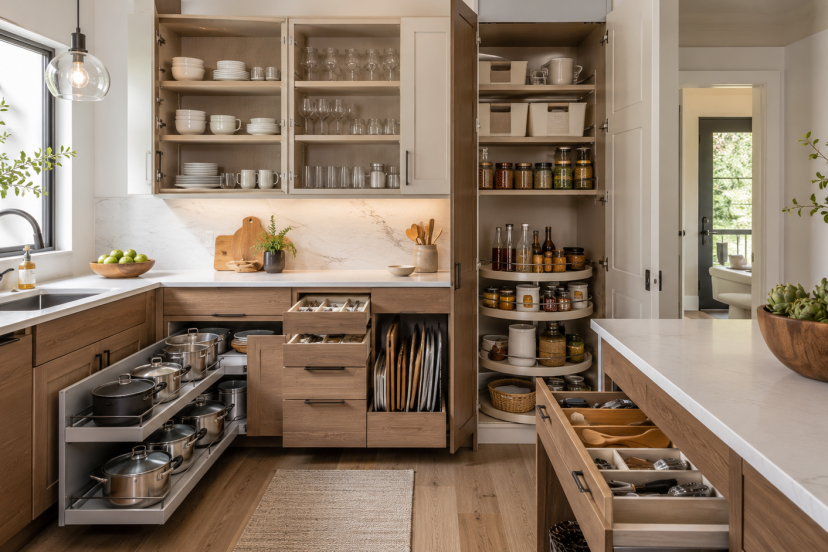
A deep cabinet may offer plenty of space, but the back half can feel like another postal code. Pull-out shelves bring the contents toward you, so you can see and lift items without kneeling or reaching blindly.
Before buying, measure the cabinet opening, depth, hinges, and plumbing. A poorly fitted pull-out creates more frustration than it solves.
3. Store Heavy Cookware Near Waist Level
Cast-iron pans, Dutch ovens, mixers, and large appliances deserve prime real estate. Store them around waist height or slightly below it rather than on the floor or above your head.
Lift with the object close to your torso, and turn with your feet instead of twisting your back. OSHA’s material-handling guidance also recommends limiting bending and overhead reaching when moving heavier objects.
Your back should not have to negotiate with a stand mixer before breakfast.
4. Use Vertical Dividers for Pans, Trays, and Lids
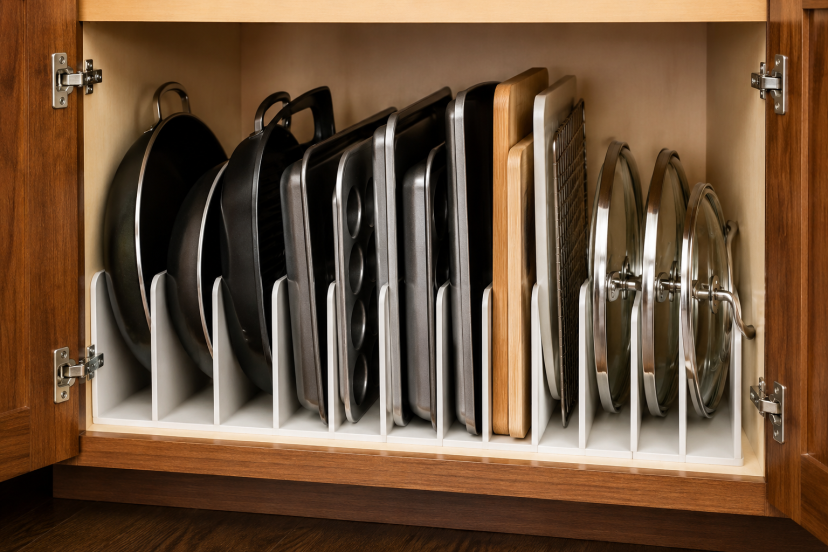
Stacked bakeware looks tidy until you need the pan at the bottom. Vertical dividers let you slide out one item instead of lifting and balancing an entire tower.
Use them for cutting boards, baking sheets, muffin tins, serving trays, and pot lids. Place heavier pieces closest to the cabinet opening, where they require less reaching.
Adjustable dividers are especially useful because you can change the spacing when your cookware collection changes.
5. Put Turntables in Corners and Deep Shelves
A turntable brings stored items to the front with a small push. It works well for oils, sauces, jars, condiments, vitamins, and cleaning supplies.
Avoid loading it with heavy glass containers. A raised edge and nonslip base help keep items stable.
Group similar products together so finding the mustard does not become a game-show challenge. You can also place rarely used items in the center and everyday products around the outer edge.
6. Build Storage Around Kitchen Tasks
Create small work zones instead of organizing only by product type. Keep knives, cutting boards, and mixing bowls near the prep counter. Store cookware and utensils near the stove. Place mugs, coffee, and filters together.
This reduces extra steps and repeated reaching. It follows the same fit-the-tools-to-the-task principle used when choosing ergonomic office accessories for a more comfortable workstation.
Your zones do not need to look perfect. They simply need to match how you actually cook.
7. Add Shelf Risers to Prevent Unstable Stacks
Shelf risers use empty vertical space inside cabinets. They can separate plates from bowls, mugs from glasses, or canned goods from food packets.
The main benefit is easier access. You can remove one item without lifting several others first.
Choose a riser with nonslip feet and enough load capacity for what you plan to store. Then place frequently used pieces on the easiest level to reach.
Avoid building a wobbly tower of risers. One or two stable levels are usually more practical than squeezing in every possible inch.
8. Choose Bins With Open Fronts or Comfortable Handles
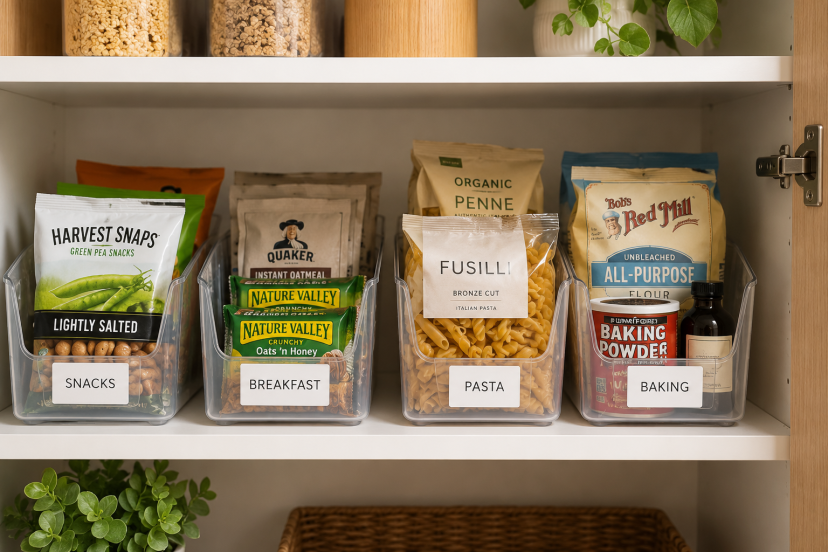
Bins work best when you can grip and move them safely. Look for open-front designs for snacks and packets, or broad handles that allow a secure hold.
Do not turn a large bin into a heavy mystery box filled with cans, jars, and forgotten bags of flour. Smaller containers are easier to lift and less painful when they land on your foot.
Clear sides or front labels also reduce searching. You should be able to identify the contents before pulling the container from the shelf.
9. Make Drawers Easy to Scan
Crowded drawers encourage awkward wrist angles, pinched fingers, and unnecessary rummaging. Use shallow dividers for cutlery, cooking tools, measuring spoons, clips, and small gadgets.
Keep handles facing your natural grip and place frequently used tools near the front. Less-used pieces can sit toward the back.
If a drawer sticks or requires a hard tug, repair or replace the slides. Accepting a tiny daily wrestling match does not make the drawer more charming.
10. Declutter According to Frequency of Use
Duplicate tools, unused appliances, and expired food push useful things into harder-to-reach spaces.
Keep daily items in the easiest zone, weekly items nearby, and occasional items farther away. Donate, discard, or relocate anything you rarely use.
Try reviewing one cabinet at a time instead of emptying the entire kitchen. A focused approach is less overwhelming and makes it easier to notice which movements cause discomfort.
A little open space can make cabinets safer and much easier to use. It leaves room for safer movement and easier visibility.
Top Kitchen Storage Products to Reduce Strain
The right storage tools can make your kitchen easier to navigate and more comfortable to use. Before choosing an organizer, measure your cabinets carefully and consider which items you reach for, lift, or move most often.
1. Rev-A-Shelf Steel Wire Pullout Drawer Organizer Shelf
This sliding basket brings cookware or pantry goods out of a deep base cabinet. It is useful when crouching and reaching cause discomfort.
2. Joseph Joseph DrawerStore Compact Utensil Organizer
Tiered compartments store cutlery in a narrow footprint and keep the drawer easy to scan. It suits kitchens where a standard flat tray takes up too much space.
3. YouCopia MagicTrack Rectangle Turntable
This turntable brings bottles, jars, and pantry items within reach on a deep shelf. Its rectangular shape can use cabinet space more efficiently than some round trays.
4. SONGMICS Cabinet Organizer Shelf Set
These stackable and expandable shelf risers create separate levels for dishes, cups, spices, or pantry goods.
5. Simple Houseware Two-Tier Stackable Can Rack
Angled shelves roll cans toward the front, making labels easier to see and reducing deep reaching.
Conclusion
Good ergonomic kitchen storage is not about squeezing the maximum number of objects into every cabinet. It is about placing the right things where your body can reach them with less effort. Begin with one problem area, such as a deep pan cabinet or crowded utensil drawer. Move heavy items closer, bring hidden items forward, and give frequently used tools a clear home. Small changes can make cooking smoother, safer, and noticeably less tiring. Your kitchen may not start doing the dishes for you, sadly, but it can stop making every meal feel like a mobility test.
FAQs
What is ergonomic kitchen storage?
Ergonomic kitchen storage organizes cabinets, drawers, shelves, and tools around the user’s natural reach, strength, grip, and workflow.
The aim is to reduce unnecessary bending, stretching, twisting, lifting, and searching during everyday kitchen tasks.
What is the safest place to keep heavy cookware and appliances?
Place heavy items close to waist height when possible. Avoid storing them on the floor or above shoulder level.
A sturdy drawer or pull-out shelf can make heavy cookware and appliances easier to access while helping you keep the load close to your body.
Are open shelves more ergonomic than cabinets?
Open shelves can improve visibility and remove the need to open cabinet doors. However, they are not automatically more ergonomic.
Items still need to sit within a comfortable reach zone, and open shelves should not become cluttered or require frequent overhead reaching.
How can I improve a rental kitchen without remodeling?
Use removable shelf risers, turntables, drawer dividers, handled bins, vertical racks, and freestanding carts.
You can also reorganize items according to how often you use them. Moving one heavy appliance from a low cabinet to an easier shelf can make a noticeable difference.
What should I measure before buying an organizer?
Measure the cabinet’s interior width, depth, height, and clear opening between the hinges or face frame.
For drawers, check the internal width and height. Also confirm that plumbing, door hardware, shelf supports, or electrical cords will not block the organizer.