Top 10 Ergonomic Footrest
We may earn a commission for purchases made using our links. Please see our disclosure to learn more.
A supportive chair can only do so much when your feet are dangling or planted at an awkward angle. The right ergonomic footrest gives your feet a stable place to land, helping you sit more comfortably while reducing unnecessary pressure on your legs and lower back.
This guide compares ten popular footrests for home offices, corporate workstations, gaming setups, and standing desks. You will find soft memory foam cushions, adjustable platforms, wooden rockers, and firm foot stools, along with the advantages and drawbacks of each design.
Our Top Picks
| Product | Best For | Key Feature | Rating | Read More |
| ComfiLife Foot Rest | Best overall | Adjustable memory foam | ★★★★★ | Read more |
| Everlasting Comfort Foot Rest | All-day softness | High-density comfort foam | ★★★★★ | Read more |
| ErgoFoam Adjustable Foot Rest | Firm foam support | Compression-resistant foam | ★★★★★ | Read more |
| BlissTrends Foot Rest | Best value | Two removable height layers | ★★★★☆ | Read more |
| StrongTek Wooden Foot Rocker | Active sitting | Smooth rocking movement | ★★★★★ | Read more |
| EUREKA ERGONOMIC Footrest | Hard adjustable platform | Tilting massage surface | ★★★★⯪ | Read more |
| Humanscale FR300 Foot Rocker | Premium workstations | Ball-bearing rocking mechanism | ★★★★☆ | Read more |
| StrongTek Fixed Wooden Footrest | Stable support | Durable fixed platform | ★★★★★ | Read more |
| VIVO Standing Foot Rest | Standing desks | Elevated adjustable platform | ★★★★☆ | Read more |
| Kensington SoleMate Footrest | Small office spaces | Adjustable tilt angle | ★★★★☆ | Read more |
How to Choose the Best Ergonomic Footrest
Start by checking whether your feet can rest flat while your knees remain roughly level with or slightly below your hips. When that is not possible, a footrest can help create a more balanced sitting position and make it easier to use your chair’s back support.
Consider these features before buying:
- Height: Shorter users generally benefit from a taller or adjustable model.
- Surface: Foam feels softer, while wood and plastic provide firmer support.
- Movement: Rocking platforms let you change ankle position throughout the day.
- Grip: A nonslip base is especially important on hardwood or tile.
- Cleaning: Removable, washable covers are useful if you work without shoes.
A footrest works best as part of a complete workstation. You can also review these ergonomic desk accessories for improving posture and practical office posture tips when adjusting your setup.
Top 10 Ergonomic Footrest Options
1. ComfiLife Foot Rest for Under Desk

The ComfiLife Foot Rest earns our top spot because it balances softness, support, and adjustability without becoming complicated. Its high-density memory foam forms a broad teardrop-shaped surface, while the removable lower layer lets you change the height.
You can also flip it over and use the curved side for gentle rocking. The washable cover and compact weight make it practical for both permanent offices and hybrid work setups.
Key features: Adjustable height, memory foam core, removable cover and rocking option
Pros: Soft but supportive, easy to reposition and suitable for barefoot use
Cons: Foam may feel too warm or soft for users who prefer a rigid platform
Best for: Most home-office workers
Why we recommend it: It offers the widest appeal and requires almost no setup.
2. Everlasting Comfort Memory Foam Foot Rest

Everlasting Comfort is a strong choice when cushioning matters more than rigid support. Its contoured foam surface provides a comfortable place to rest bare feet, socks, or slippers during long work sessions.
The curved profile can also be flipped for rocking, giving restless sitters an easy way to change foot position. It has accumulated a particularly large volume of customer feedback, although the softer construction may compress more than a wooden or plastic model.
Key features: Contoured foam, washable cover and reversible rocking design
Pros: Plush feel, lightweight construction and generous surface area
Cons: Less precise height adjustment than layered models
Best for: Long workdays and users who prefer soft support
Why we recommend it: Few foam footrests combine this level of comfort with such extensive customer feedback.
3. ErgoFoam Adjustable Foot Rest

Some foam footrests feel comfortable for a week and then slowly flatten. ErgoFoam addresses that concern with a denser, compression-resistant foam core designed to provide firmer support.
Its two-piece construction gives you more control over height, while the double-sided nonslip base helps keep it steady. Different cover options are available, including breathable mesh and softer fabric finishes.
Key features: High-density foam, two height levels and nonslip base
Pros: Firmer than many foam cushions and resistant to sagging
Cons: Costs more than basic foam alternatives
Best for: Users who want cushioning without a deeply squishy feel
Why we recommend it: It offers one of the better combinations of softness and long-term structure.
4. BlissTrends Foot Rest for Under Desk

The BlissTrends footrest delivers many of the same practical features as premium foam models at a more accessible price. Two attached sections let you use the footrest at different heights, and the outer cover can be removed for washing.
Its elongated shape gives you enough room to shift your feet rather than keeping them locked together. The foam is comfortable, though users wanting strong resistance may prefer ErgoFoam or a hard platform.
Key features: Two height layers, washable cover and elongated cushion
Pros: Good value, lightweight and simple to adjust
Cons: Not as firm as wood or molded plastic
Best for: Budget-conscious home offices
Why we recommend it: It covers the essential features without adding unnecessary expense.
5. StrongTek Wooden Foot Rest Rocker
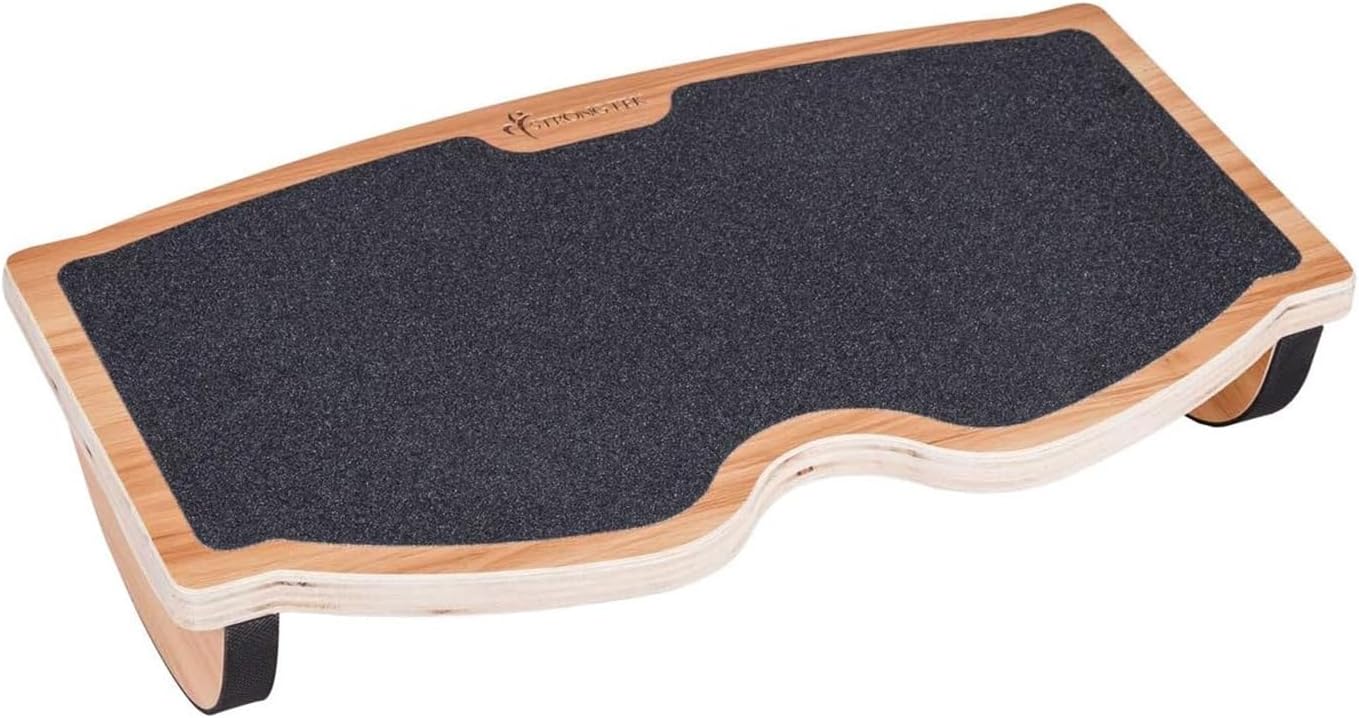
The StrongTek rocker swaps foam for a solid wooden platform that moves with your ankles. Its curved base lets you tilt your toes up or down, encouraging small position changes while you read, type, or join meetings.
A textured top helps prevent shoes from sliding, and the sturdy construction feels more substantial than lightweight plastic. However, the abrasive surface may be rough on thin socks or bare feet.
Key features: Wooden construction, curved rocking base and textured surface
Pros: Durable, stable and encourages ankle movement
Cons: Surface may feel coarse without shoes
Best for: Active sitters and people who dislike foam
Why we recommend it: The simple rocking action keeps your feet moving without springs or complicated controls.
6. EUREKA ERGONOMIC Tilt Adjustable Footrest
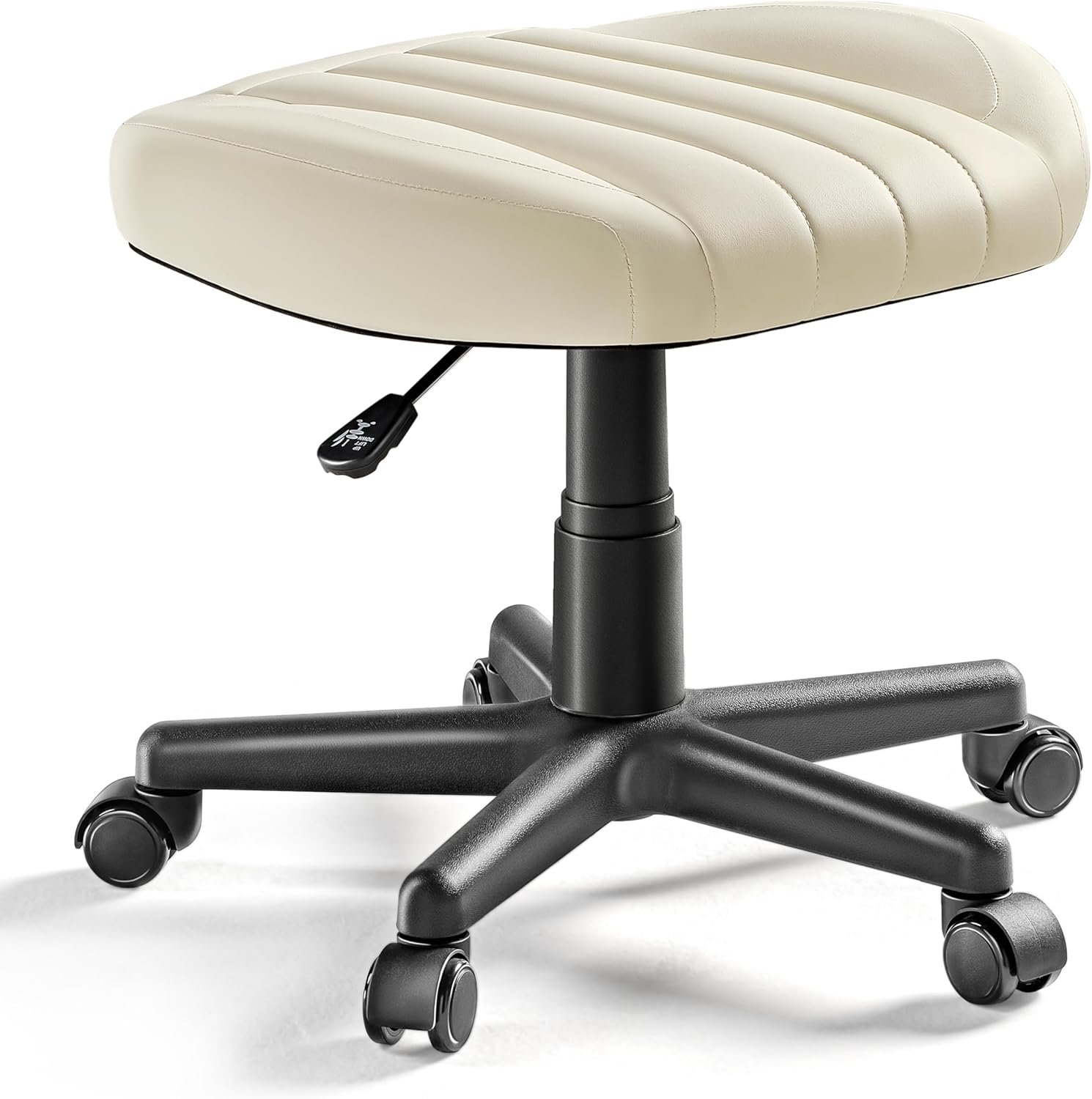
The EUREKA ERGONOMIC footrest is a better match for people who want a traditional office platform rather than a cushion. Its metal frame supports a textured surface that tilts as your feet move.
Certain versions also offer multiple height positions, giving you more control over lower-body alignment. The massage texture works well with shoes, although it may feel pronounced against bare feet.
Key features: Metal frame, tilting platform and textured massage surface
Pros: Firm support, durable construction and responsive movement
Cons: Narrower and less comfortable for barefoot use
Best for: Corporate offices and shared workstations
Why we recommend it: It provides a familiar, professional design with useful adjustability.
7. Humanscale FR300 Foot Rocker

The Humanscale FR300 is a premium option built for long-term office use. It combines a solid hardwood platform with a steel frame and ball-bearing rollers, producing a smoother rocking motion than basic curved boards.
Its height can be adjusted through a broad range, helping it accommodate different chairs and leg lengths. The biggest drawback is price, but its materials and refined movement place it above most mass-market alternatives.
Key features: Hardwood platform, steel frame, height adjustment and smooth rollers
Pros: Refined movement, strong construction and premium appearance
Cons: Significantly more expensive than foam footrests
Best for: Executive offices and long-term workstation upgrades
Why we recommend it: It feels like durable office furniture rather than a temporary accessory.
8. StrongTek Fixed Wooden Footrest

Not everyone wants a footrest that rocks or tilts. This fixed StrongTek model provides a stable wooden platform that stays at a consistent angle while you work.
Its broad nonslip surface accommodates larger shoes, and the solid construction avoids the flexing sometimes found in plastic platforms. It is less adaptable than a moving footrest, but that simplicity can be an advantage for users who want dependable support.
Key features: Solid wood, fixed angle and nonslip top
Pros: Sturdy, spacious and free of moving parts
Cons: Limited adjustability
Best for: Users who prefer steady foot placement
Why we recommend it: It is refreshingly simple and built to handle daily use.
9. VIVO Height-Adjustable Standing Foot Rest

Standing-desk users need a different kind of support. The VIVO platform lets you elevate one foot while standing, which can make it easier to alternate your stance instead of keeping your weight evenly fixed for hours.
Its platform height can be adjusted, and the nonslip surface helps keep shoes securely positioned. It also works as a tall seated footrest, although its rigid frame takes up more room than a foam cushion.
Key features: Elevated platform, adjustable height and nonslip surface
Pros: Works for sitting and standing, sturdy and easy to clean
Cons: Bulky under compact desks
Best for: Sit-stand workstations and drafting chairs
Why we recommend it: It solves a need that ordinary under-desk cushions cannot.
10. Kensington SoleMate Adjustable Footrest

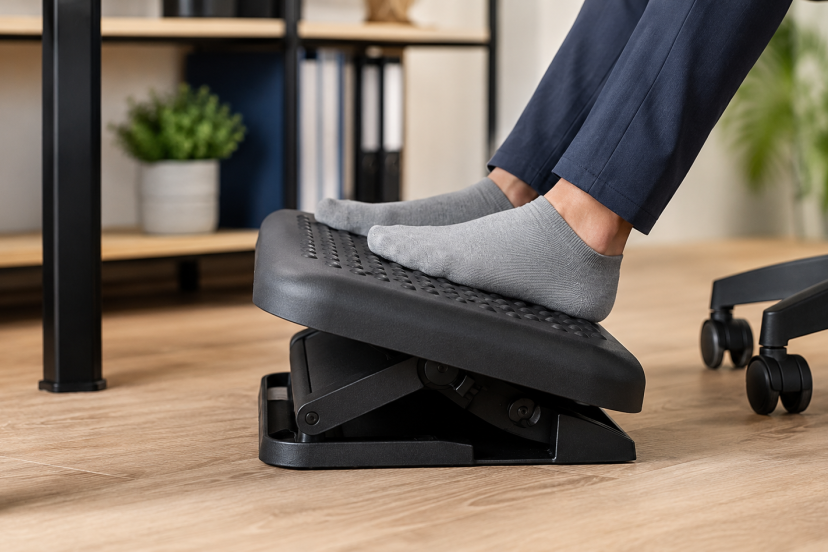
The Kensington SoleMate uses a straightforward molded platform with an adjustable incline. It is slim enough for many compact work areas and provides a firmer feel than memory foam.
The textured top helps maintain foot placement, while the angle adjustment lets you experiment with different positions. Its plastic construction is not as refined as wood or metal, but it remains a practical choice for conventional office setups.
Key features: Adjustable incline, textured platform and compact profile
Pros: Easy to clean, simple to operate and suitable for small desks
Cons: Plastic frame feels less premium
Best for: Traditional offices and limited under-desk space
Why we recommend it: It offers useful adjustment without demanding much room or maintenance.
Final Thoughts
The best ergonomic footrest should support your feet without forcing your legs into one rigid position. ComfiLife is our strongest all-around choice because it combines adjustable height, comfortable foam, and a reversible rocking design. Choose StrongTek when you prefer firm wooden support, EUREKA ERGONOMIC for a traditional tilting platform, or VIVO for a standing desk. Whichever model you select, pair it with the correct chair height and change positions regularly rather than expecting one accessory to fix an otherwise poorly adjusted workstation. For added lower-back comfort, explore our guide to choosing the best ergonomic lumbar support cushion for your chair.
Frequently Asked Questions
Are ergonomic footrests actually helpful?
An ergonomic footrest can help when your feet do not rest comfortably on the floor after your chair has been adjusted to the correct desk height. It provides a stable contact point and may make it easier to sit against the chair’s backrest instead of sliding forward.
How high should an under-desk footrest be?
The correct height depends on your chair, desk, and leg length. Your thighs should feel supported, your knees should not be pushed sharply upward, and your feet should rest without stretching. An adjustable model is safest when you are unsure of the height you need.
Is a foam or hard footrest better?
Foam is better for cushioning and barefoot comfort. Hard plastic, wood, and metal platforms provide firmer support and are usually easier to clean. A rocking hard platform is often a good choice for people who like to move their ankles while working.
Should an ergonomic footrest rock?
Rocking is optional, but it can make position changes easier. Some users enjoy the movement, while others concentrate better with a fixed platform. Choose a model that moves smoothly without sliding across the floor.
Can I use a footrest with a standing desk?
Yes. A raised standing footrest lets you place one foot above the other and alternate sides during the day. It should be stable, nonslip, and high enough to change your stance without making you lean heavily to one side.