Top 10 Ergonomic Garden Tools
We may earn a commission for purchases made using our links. Please see our disclosure to learn more.
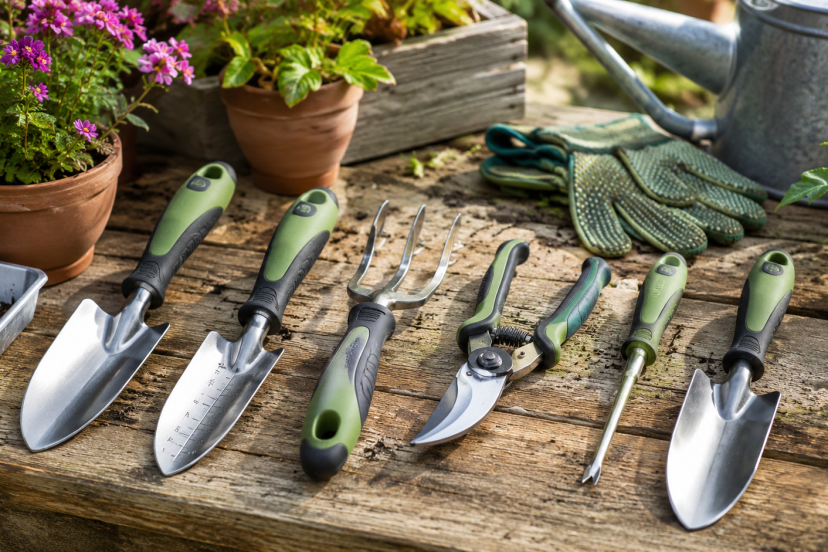
Gardening should leave you feeling satisfied—not as though you have spent the afternoon wrestling a stubborn wheelbarrow while doing lunges. The best ergonomic garden tools reduce unnecessary bending, squeezing, twisting, and kneeling. Whether you have limited grip strength, sensitive knees, occasional back discomfort, or simply a large yard to maintain, the right equipment can help you work more comfortably and efficiently.
This guide covers ten well-reviewed options for pruning, planting, digging, weeding, kneeling, and transporting materials. Selections were based on ergonomic design, versatility, brand reputation, Amazon customer feedback, and editorial testing where available.
Our Top Picks
| Product | Best For | Key Feature | Rating | Read More |
| Fiskars 4-Claw Stand-Up Weeder | Removing taproot weeds | Long handle and easy-eject mechanism | ★★★★⯪ | Read more |
| FELCO 6 Bypass Pruner | Precision pruning | Angled head and shock absorbers | ★★★★⯪ | Read more |
| The Gardener’s Friend Ratchet Pruner | Limited hand strength | Three-stage ratchet action | ★★★★⯪ | Read more |
| Fiskars Ergo Garden Trowel | Everyday planting | Lightweight ergonomic handle | ★★★★⯪ | Read more |
| Nisaku NJP650 Hori Hori | Multipurpose garden work | Straight and serrated blade edges | ★★★★★ | Read more |
| Radius Garden Root Slayer Nomad | Roots and compacted soil | Serrated V-shaped blade | ★★★★★ | Read more |
| Ohuhu Garden Kneeler and Seat | Low-level garden work | Reversible padded seat and kneeler | ★★★★⯪ | Read more |
| Gorilla Grip Kneeling Pad | Portable knee support | Thick, water-resistant foam | ★★★★⯪ | Read more |
| WORX WG050 Aerocart | Moving heavy materials | Balanced two-wheel design | ★★★★⯪ | Read more |
| Seeding Square Tool Kit | Raised-bed planting | Color-coded spacing template | ★★★★⯪ | Read more |
Top 10 Ergonomic Garden Tools Reviewed
1. Fiskars 4-Claw Stand-Up Weeder

The Fiskars stand-up weeder removes dandelions, thistles, and other taproot weeds without requiring you to kneel or repeatedly bend at the waist.
Its long aluminum shaft, offset handle, foot platform, and eject mechanism work together to reduce strain on your back, knees, and wrists. The four serrated claws perform especially well when the ground is slightly damp.
Key features:
- 39-inch lightweight shaft
- Four stainless-steel claws
- Offset ergonomic handle
- Foot-operated insertion
- Push-to-eject mechanism
Pros: Fast, comfortable, and highly effective on deep-rooted lawn weeds.
Cons: May leave a small hole and can struggle in extremely hard, dry soil.
Best for: Gardeners who want to weed without crouching.
Why we recommend it: It solves one of gardening’s most repetitive and back-unfriendly jobs with very little hand effort.
2. FELCO 6 Ergonomic Bypass Pruner

The FELCO 6 is a premium bypass pruner designed primarily for right-handed gardeners with small to medium hands. Its angled cutting head helps the tool follow the natural position of your wrist instead of forcing your hand into an awkward angle.
Rubber shock absorbers soften the closing impact, while hardened steel blades create clean cuts on stems and branches. Nearly every component is replaceable, which helps justify its higher price.
Key features:
- Angled cutting head
- Forged aluminum handles
- Replaceable hardened-steel blades
- Non-slip grips
- Rubber shock absorbers
Pros: Excellent cutting quality, comfortable shape, and repairable construction.
Cons: Expensive and designed mainly for right-handed use.
Best for: Frequent pruning and gardeners with smaller hands.
Why we recommend it: It feels balanced and precise during long pruning sessions.
3. The Gardener’s Friend Ratchet Pruning Shears
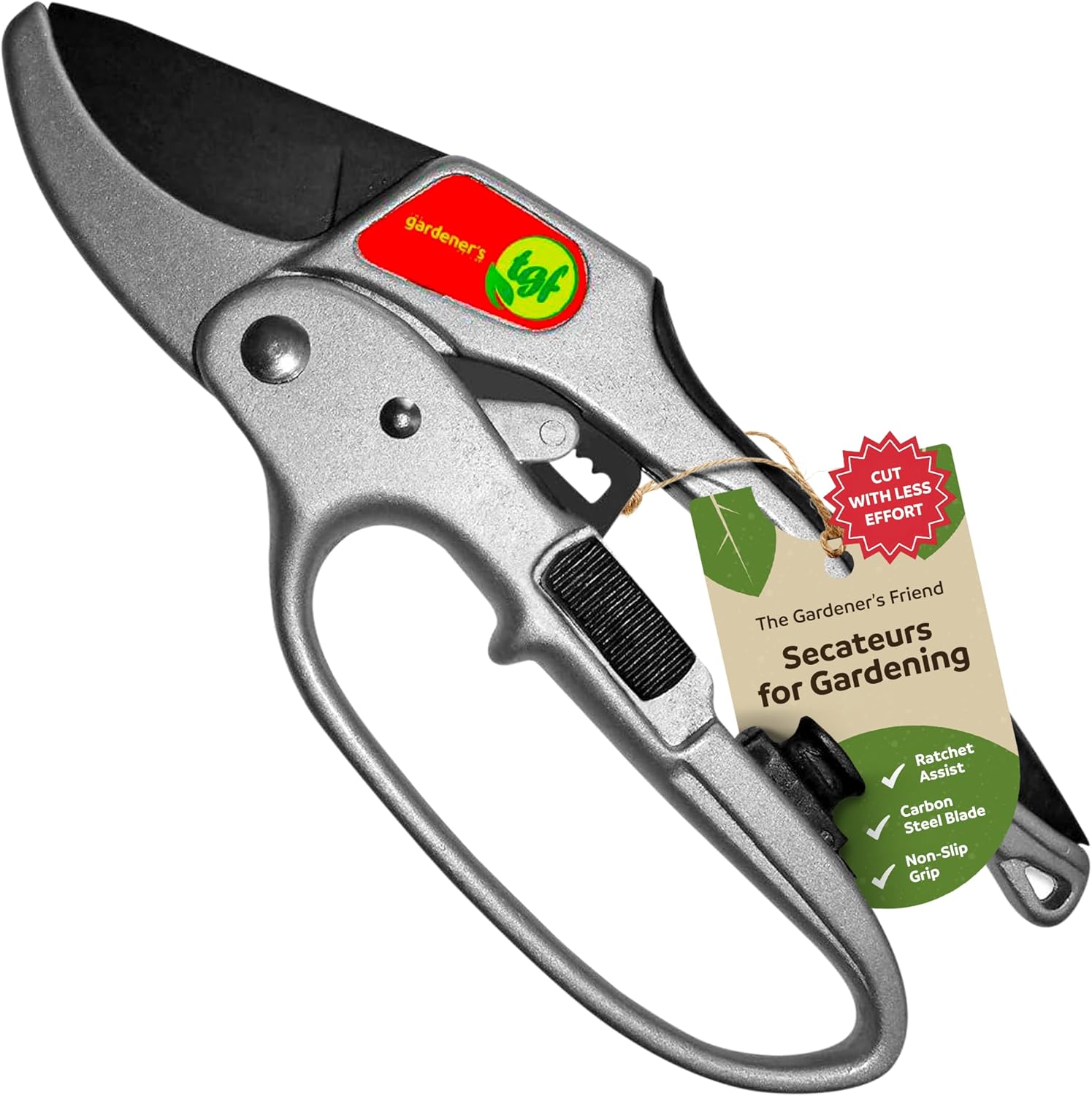
Traditional pruners require you to complete each cut with a single squeeze. The Gardener’s Friend divides the cutting motion into stages, allowing you to work through thicker branches gradually.
Its ratcheting mechanism multiplies cutting force, while padded handles help absorb pressure. This design can be particularly useful for gardeners with arthritis, reduced grip strength, or hands that tire quickly.
Key features:
- Three-stage ratchet system
- Padded ergonomic handles
- Lightweight aluminum body
- Nonstick steel blade
- Left- or right-handed operation
Pros: Requires less grip force and handles relatively thick growth.
Cons: Slower than conventional pruners for numerous thin stems.
Best for: Seniors and gardeners with weak or sensitive hands.
Why we recommend it: The assisted cutting action makes demanding pruning noticeably more manageable.
4. Fiskars Ergo Garden Trowel

The Fiskars Ergo Garden Trowel is a practical choice for planting flowers, loosening soil, and moving potting mix. Its cast-aluminum head resists rust, while the soft, sculpted handle encourages a more secure grip.
At just over six ounces, it is light enough for repetitive container and flower-bed work. Its affordable price also makes it an easy first ergonomic upgrade.
Key features:
- Lightweight cast-aluminum head
- Soft ergonomic grip
- Rust-resistant construction
- Hanging storage hole
Pros: Lightweight, inexpensive, and comfortable for routine planting.
Cons: The wide blade is less precise in tightly planted containers.
Best for: Beginners, container gardeners, and everyday digging.
Why we recommend it: It offers dependable comfort without turning a simple trowel into a major investment.
5. Nisaku NJP650 Hori Hori Knife

The Nisaku Hori Hori combines several garden tools in one compact design. It can dig planting holes, divide perennials, remove weeds, cut roots, open soil bags, and measure planting depth.
Its Japanese stainless-steel blade has a smooth edge on one side and a serrated edge on the other. The substantial wooden handle provides good leverage, although gloves are wise because the blade is exceptionally sharp.
Key features:
- Stainless-steel blade
- Straight and serrated edges
- Depth markings
- Wooden handle
- Protective sheath
Pros: Extremely versatile, durable, and easy to control.
Cons: Heavier than a basic trowel and requires careful handling.
Best for: Gardeners who prefer one multipurpose hand tool.
Why we recommend it: Few tools handle planting, cutting, and weeding equally well.
6. Radius Garden Root Slayer Nomad

The Root Slayer Nomad is a compact digging tool made for cutting through tangled roots and stubborn ground. Its V-shaped blade and serrated sides reduce the need to repeatedly chop at roots with a traditional shovel.
A circular grip gives your hands several comfortable holding positions, which can help you maintain better wrist alignment while digging.
Key features:
- Serrated carbon-steel blade
- V-shaped digging tip
- Circular ergonomic handle
- Compact 39-inch design
- Forward foot rests
Pros: Cuts small roots efficiently and offers excellent leverage.
Cons: The smaller blade moves less soil than a full-size shovel.
Best for: Dividing plants, transplanting shrubs, and working around roots.
Why we recommend it: It replaces forceful chopping with a cleaner, more controlled digging motion.
7. Ohuhu Garden Kneeler and Seat

The Ohuhu garden kneeler flips between a padded kneeling platform and a small bench. When used as a kneeler, its raised side rails provide sturdy handholds for returning to a standing position.
The steel frame folds for storage, and detachable pouches keep hand tools within reach. This reduces repeated standing, walking, and bending while working through a flower bed.
Key features:
- Reversible seat and kneeler
- EVA foam padding
- Folding steel frame
- Side support handles
- Detachable tool pouches
Pros: Versatile, supportive, and easy to carry.
Cons: The seat may feel narrow for some users.
Best for: Planting, weeding, and pruning close to the ground.
Why we recommend it: It supports your knees and gives you leverage when standing back up.
8. Gorilla Grip Extra-Thick Kneeling Pad

Gardeners who do not need a full bench may prefer this lightweight kneeling pad. Its high-density foam cushions your knees from hard soil, gravel, patios, and raised-bed edges.
The textured surface helps reduce slipping, while the water-resistant material is easy to rinse after muddy jobs. It is also far easier to move around than a steel-framed kneeler.
Key features:
- Thick high-density foam
- Textured non-slip surfaces
- Dirt- and water-resistant material
- Lightweight portable design
Pros: Affordable, easy to clean, and highly portable.
Cons: Does not provide handles or assistance when standing.
Best for: Short planting sessions and gardeners who move frequently.
Why we recommend it: It delivers uncomplicated knee protection without adding bulky equipment.
9. WORX WG050 Aerocart

The WORX Aerocart converts between a wheelbarrow, dolly, plant mover, and yard cart. Its two-wheel layout provides more side-to-side stability than a traditional single-wheel barrow.
The design distributes loads over the wheels, reducing the amount of weight you must balance with your arms. It works particularly well for moving mulch, potted plants, soil bags, and moderate loads around residential yards.
Key features:
- Eight configurable functions
- Two flat-free tires
- Balanced load design
- Plant- and rock-moving attachments
- Steel construction
Pros: Stable, versatile, and easier to balance than a standard wheelbarrow.
Cons: Its tub is smaller than a contractor-style wheelbarrow.
Best for: Homeowners who regularly move varied garden materials.
Why we recommend it: It reduces awkward lifting while replacing several bulky transport tools.
10. Seeding Square Tool Kit

The Seeding Square simplifies planting by showing where to position seeds within a square-foot garden. Color-coded holes correspond to different spacing patterns, eliminating repeated measuring and guesswork.
The included dibber creates planting holes at consistent depths. This is especially helpful in raised beds, where an organized layout can reduce unnecessary reaching and repositioning.
Key features:
- Color-coded planting template
- Magnetic dibber
- Seed funnel
- Spacing and planting guide
- Durable plastic construction
Pros: Fast, beginner-friendly, and excellent for organized raised beds.
Cons: Less useful for irregular garden layouts or established beds.
Best for: Square-foot gardening, vegetables, and family planting projects.
Why we recommend it: It turns a surprisingly fiddly task into a simple repeatable process.
How to Choose Ergonomic Garden Tools
Start with the task that causes the most discomfort. A cushioned pruner will not solve repeated back strain from weeding, just as a long-handled weeder will not help tired fingers during pruning.
Look for:
- Appropriate handle size: Oversized grips may be uncomfortable for small hands.
- Neutral wrist positioning: Angled heads and circular grips can reduce twisting.
- Mechanical assistance: Ratchets, gears, and leverage systems reduce required force.
- Suitable tool weight: A lighter tool is not always stronger, but it is usually easier to use repeatedly.
- Long or adjustable handles: These reduce bending but should still suit your height.
- Replaceable components: New blades and springs can extend the life of premium tools.
For more ways to protect your hands during repetitive jobs, see this guide to choosing ergonomic tools for everyday tasks.
Final Thoughts
The best ergonomic garden tools address the movements that make gardening uncomfortable for you. The Fiskars 4-Claw Stand-Up Weeder is our top choice for reducing bending during lawn care, while the Gardener’s Friend Ratchet Pruner is a strong option for limited grip strength. For all-around ground-level comfort, the Ohuhu Garden Kneeler and Seat is difficult to beat. Choose tools according to the jobs you perform most often, and your garden can remain productive without demanding quite so much from your hands, knees, and back. Click here for more ergonomic product recommendations like this.
Frequently Asked Questions
What makes a garden tool ergonomic?
Ergonomic garden tools reduces unnecessary force, awkward wrist angles, repetitive squeezing, bending, or kneeling. Common features include padded grips, angled handles, lightweight materials, mechanical assistance, and longer shafts.
Are ergonomic garden tools helpful for arthritis?
They can be. Ratchet pruners, wide cushioned handles, lightweight trowels, and tools that use leg leverage may require less hand force. Comfort varies, so choose a tool that matches your grip strength and hand size.
Are long-handled garden tools better for your back?
Long handles can reduce bending and crouching, particularly when weeding or cultivating. However, a handle that is too long, short, or heavy may create new shoulder and wrist strain.
Which ergonomic garden tool should a beginner buy first?
A comfortable trowel is a sensible starting point for container and flower-bed gardening. For lawns with frequent taproot weeds, a stand-up weeder may provide a more noticeable improvement.
How can I make gardening easier on my body?
Rotate between tasks, keep frequently used tools nearby, avoid overfilling carts, and take short movement breaks. Using raised beds, kneeling support, sharp blades, and tools sized for your body can also reduce unnecessary effort.