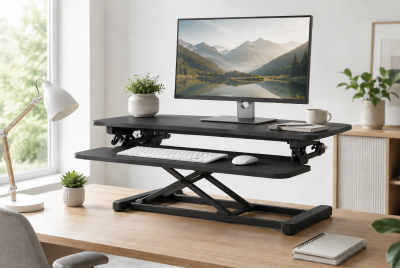
Top 10 Ergonomic Hand Tools

We may earn a commission for purchases made using our links. Please see our disclosure to learn more.
A tool can be strong, sharp, and beautifully made yet still feel miserable after 20 minutes in your hand. Poorly shaped handles, stiff mechanisms, and unnecessary weight can turn a simple repair or gardening job into an endurance test. The best ergonomic hand tools are designed to improve grip, leverage, control, or working posture. This guide covers ten highly rated Amazon options for household repairs, workshop projects, electrical work, crafts, and gardening. Each product serves a different purpose, so you can build a useful toolkit without buying several versions of essentially the same thing.
Our Top Picks
| Product | Best For | Key Feature | Rating | Read More |
| Wera Kraftform Plus 334/6 | Screwdriving | Contoured multi-zone handles | ★★★★⯪ | Read more |
| Megapro 13-in-1 Ratcheting Driver | General household repairs | Ratcheting mechanism and stored bits | ★★★★⯪ | Read more |
| IRWIN VISE-GRIP GrooveLock Set | Plumbing and gripping | Push-button jaw adjustment | ★★★★⯪ | Read more |
| Channellock 8WCB WideAzz | Nuts and bolts | Wide jaw in a compact wrench | ★★★★⯪ | Read more |
| Estwing E3-16C Hammer | Carpentry and home repairs | Shock-reduction grip | ★★★★⯪ | Read more |
| Klein Tools 11055 | Electrical projects | Cushioned handles and precise stripping | ★★★★⯪ | Read more |
| Milwaukee FASTBACK 48-22-1502 | Boxes and sheet materials | One-handed opening | ★★★★⯪ | Read more |
| Fiskars PowerGear2 Pruner | Pruning with less effort | Gear-assisted cutting action | ★★★★⯪ | Read more |
| Fiskars PowerCut Easy Action Snips | Crafts and repetitive cutting | Spring-assisted handle | ★★★★⯪ | Read more |
| Radius Garden 100 Trowel | Comfortable gardening | Curved Natural Radius Grip | ★★★★⯪ | Read more |
What Makes a Hand Tool Ergonomic?
Ergonomic hand tools should help the tool fit your hand and task rather than forcing your hand into an awkward position. Useful design features include contoured handles, cushioned grip surfaces, spring-assisted opening, efficient leverage, manageable weight, and controls that require less pinching.
Handle size matters too. A thick grip may feel secure in larger hands but cumbersome in smaller ones. For a broader look at these design principles, see this guide to choosing comfortable ergonomic tools.
1. Wera Kraftform Plus 334/6 Screwdriver Set
Best for: Frequent screwdriving and workshop use
Key features: Six-piece set, contoured handles, anti-roll shape, Lasertip tips

Wera’s Kraftform handles use several grip zones to balance speed, control, and torque. The wider sections give your palm more surface area during stubborn turns, while narrower sections support quicker finger rotation.
The set includes commonly used Phillips and slotted sizes plus a storage rack. Its laser-textured tips are designed to grip screw heads more securely, which can reduce slipping and the need to press down aggressively. The set remains highly rated by Amazon customers and has accumulated well over 1,000 reviews.
Pros
- Comfortable handles for longer jobs
- Strong tip engagement
- Clearly marked sizes
- Storage rack included
Cons
- No Torx or square-drive sizes
- Individual drivers take more storage space than one multi-bit tool
2. Megapro 13-in-1 Ratcheting Driver
Best for: Everyday household repairs
Key features: Ratcheting handle, onboard bit storage, reversible mechanism

The Megapro combines several screwdriver sizes in one chunky, easy-to-control handle. Its ratcheting action lets you continue turning without repeatedly releasing and repositioning your grip—a welcome advantage when assembling furniture or working in a cramped cabinet.
The bits store inside the handle, making this a practical choice for an apartment, kitchen drawer, or compact toolbox. Wirecutter has selected this model as its preferred multi-bit screwdriver.
Pros
- Reduces repeated wrist repositioning
- Bits stay inside the handle
- Suitable for many household fasteners
- Solid choice for a small toolkit
Cons
- Thicker handle may not suit small hands
- Not ideal for deeply recessed screws
3. IRWIN VISE-GRIP GrooveLock Pliers Set
Best for: Plumbing fixtures, pipes, and irregular fasteners
Key features: Push-button adjustment, V-shaped jaws, molded grips

Traditional groove-joint pliers can be fiddly to adjust. IRWIN’s GrooveLock design uses a button that lets you slide the jaws into position without opening the tool widely or hunting for the correct groove.
The V-shaped jaws contact rounded, square, and hexagonal surfaces, while the molded handles give you a broader gripping area. The two-piece set includes useful 8-inch and 10-inch sizes and was recently available through Amazon.
Pros
- Fast one-handed jaw adjustment
- Two useful sizes
- Good grip on pipes and fittings
- Comfortable molded handles
Cons
- Handles may feel bulky in smaller hands
- Not insulated for live electrical work
4. Channellock 8WCB WideAzz Adjustable Wrench
Best for: A compact toolkit
Key features: Wide jaw capacity, comfort grip, engraved measurement scales

The 8WCB offers the jaw capacity of many larger adjustable wrenches without the added length and weight. Channellock says its opening can accommodate fasteners commonly handled by a 12-inch wrench, making it particularly handy under sinks and inside machinery.
The Code Blue grip is easier to hold than a bare steel handle, while the slim jaws improve access. The Spruce also selected this model as its best overall adjustable wrench, praising its capacity, grip, and ability to reach tight spaces.
Pros
- Large capacity for its length
- Comfortable coated grip
- Useful measurement markings
- Easier to carry than a full wrench set
Cons
- Jaw edges may feel sharp
- Adjustable jaws can develop minor play
5. Estwing E3-16C Curved Claw Hammer
Best for: General carpentry and household repairs
Key features: One-piece steel construction, shock-reduction grip, balanced 16-ounce head
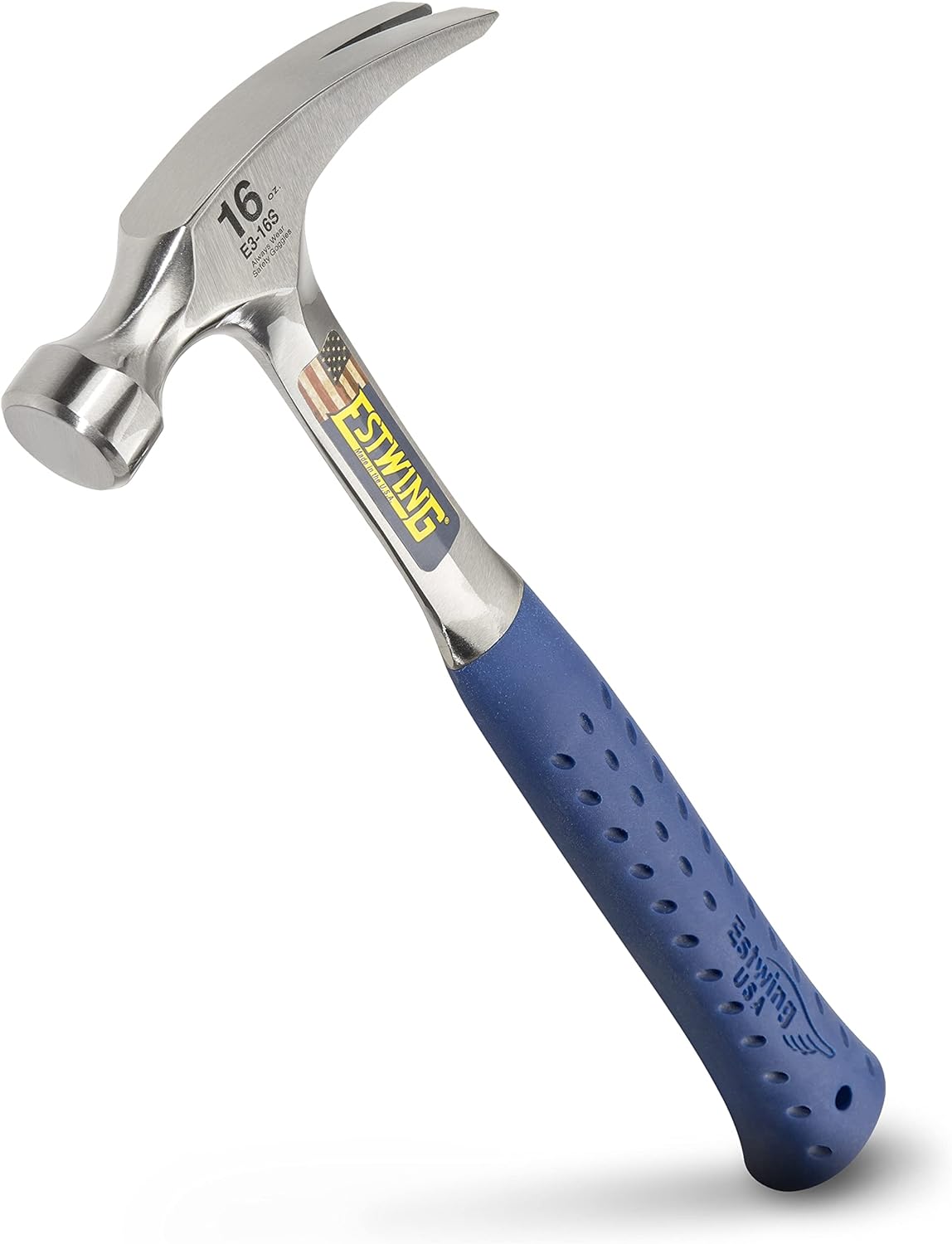
Estwing forges this hammer as one piece of steel, removing the joint where a separate handle can loosen. Its molded grip helps absorb vibration while providing a secure surface for controlled swings.
At 16 ounces, it is substantial enough for framing repairs and nail pulling without feeling as unwieldy as a heavy framing hammer. It is also a long-standing Wirecutter hammer recommendation.
Pros
- Durable one-piece construction
- Grip helps dampen vibration
- Comfortable balance
- Versatile size for home projects
Cons
- Heavier than fiberglass-handled alternatives
- Steel construction still transfers some impact
6. Klein Tools 11055 Wire Stripper and Cutter
Best for: Electrical repairs and hobby wiring
Key features: Cushioned grips, precision stripping holes, built-in cutter

The Klein 11055 strips commonly used solid and stranded copper-wire sizes while also cutting and looping wire. Clearly marked stripping holes reduce guesswork, and the cushioned handles are more comfortable than thin dipped grips during repeated use.
This model has earned thousands of strong customer ratings. Its main limitation is specialization: it works beautifully for supported copper wire but is not intended for every cable material or gauge.
Pros
- Precise stripping holes
- Comfortable cushioned handles
- Built-in cutting and looping functions
- Made for common household wire sizes
Cons
- Not a self-adjusting stripper
- Requires the correct hole for each gauge
7. Milwaukee FASTBACK 48-22-1502 Utility Knife
Best for: Opening boxes and cutting sheet materials
Key features: One-handed opening, blade storage, metal body, belt clip
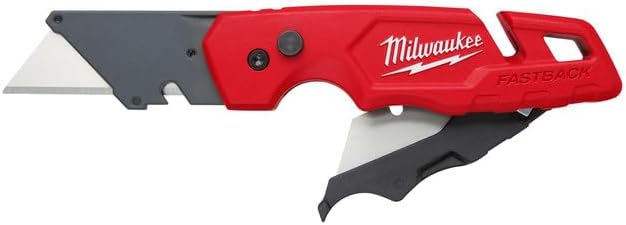
The FASTBACK’s press-and-flip mechanism lets you open the knife with one hand instead of digging a thumbnail into a stiff folding mechanism. Its contoured body provides a secure grip, and onboard storage keeps replacement blades within reach.
It is a sensible everyday choice for cardboard, carpet, drywall facing, and plastic sheeting. The knife has also appeared among Wirecutter’s recommended starter hand tools.
Pros
- Convenient one-handed operation
- Replacement blades stored inside
- Secure folding design
- Easy blade changes
Cons
- Heavier than basic plastic utility knives
- Folding body is thicker in a pocket
8. Fiskars PowerGear2 Pruner
Best for: Gardeners who want greater cutting leverage
Key features: Gear-assisted mechanism, rolling handle, bypass blade

The PowerGear2 uses a geared mechanism to increase cutting force as the handles close. Its rolling handle follows the movement of your fingers, reducing rubbing and helping distribute pressure during repetitive pruning.
Testing by Tom’s Guide found that the mechanism handled repeated cuts smoothly and made larger stems easier to manage. The wider handle may feel oversized for small hands, but it is particularly useful for people who struggle with conventional pruning shears.
Pros
- Requires less effort on tougher stems
- Rolling grip follows hand movement
- Clean bypass cutting action
- Useful for repetitive pruning
Cons
- Wider than ordinary pruners
- Mechanism requires occasional cleaning
9. Fiskars PowerCut Easy Action Snips
Best for: Crafts, packaging, fabric, and repetitive cutting
Key features: Spring-assisted opening, curved blades, ambidextrous handle

These snips reopen automatically after each cut, so your hand does not have to perform both the closing and opening motions. That small difference can be noticeable during long craft sessions or when cutting multiple pieces of cardboard and packaging.
Fiskars says the curved PowerCut blades provide added cutting force, while the handle can be used with either hand.
Pros
- Spring action reduces repeated hand movement
- Suitable for left- or right-handed users
- Stronger than ordinary craft scissors
- Lock keeps blades closed in storage
Cons
- Bulkier than standard scissors
- Spring action may feel unfamiliar initially
10. Radius Garden 100 Ergonomic Hand Trowel
Best for: Planting, scooping, and loosening garden soil
Key features: Curved handle, lightweight aluminum blade, wide grip

The Radius Garden trowel looks unusual because its handle curves above the blade. That shape lets you keep your wrist in a more neutral position while using your arm for leverage.
Its lightweight, rust-resistant aluminum blade works well in prepared beds, containers, and ordinary garden soil. Both Better Homes & Gardens and The Spruce have highlighted it for comfort, although the broad blade is less suited to rocky or extremely compacted ground.
Pros
- Curved handle supports a neutral wrist position
- Lightweight construction
- Broad, easy-to-hold grip
- Useful hanging hole
Cons
- Aluminum blade is not ideal for prying
- Wide blade lacks a sharp digging point
How to Choose Ergonomic Hand Tools
Start with the task you perform most frequently. A ratcheting screwdriver helps with repeated rotations, while spring-assisted cutters reduce repeated opening movements. For gripping tools, look for jaw designs that hold securely without requiring excessive squeezing.
Also consider these ergonomic hand tools:
- Handle diameter: It should feel secure without forcing your fingers to stretch.
- Tool weight: Extra weight may increase power but can tire your wrist.
- Grip material: Textured rubber or molded surfaces improve control.
- Hand orientation: Some products work better for right- or left-handed users.
- Leverage: Gears, long handles, and efficient pivots reduce the force you must supply.
- Working position: A comfortable handle cannot compensate for a poorly positioned workpiece.
Anyone already experiencing discomfort may also find these practical suggestions for reducing wrist pain through better ergonomics helpful. Tools can reduce unnecessary effort, but persistent pain, numbness, or weakness deserves professional medical advice.
Final Thoughts
The best ergonomic hand tools are not simply tools with soft rubber handles. They improve the way force moves from your hand into the task through better leverage, grip shape, weight, or mechanical assistance. The Wera screwdriver set is an excellent all-around choice for controlled screwdriving, while the Megapro driver saves space and reduces wrist repositioning. For gardening, the Fiskars PowerGear2 Pruner and Radius Garden trowel stand out because their designs meaningfully change how your hand and wrist work. Choose according to your most frequent task, hand size, and preferred grip rather than buying solely because a product carries an ergonomic label. Click here and explore more ergonomics products.
Frequently Asked Questions
Are ergonomic hand tools worth buying?
They are worthwhile when you use a tool frequently or find a standard handle uncomfortable. A better grip, smoother mechanism, or more efficient leverage can improve control and make repetitive work less tiring.
What handle shape is best for hand tools?
The ideal shape depends on your hand size and task. A contoured, moderately thick handle usually spreads pressure more evenly than a narrow handle, but it should not force your fingers into an overly wide grip.
Can ergonomic tools prevent carpal tunnel syndrome?
No tool can guarantee prevention. Ergonomic designs may reduce awkward wrist positions and unnecessary gripping force, but work duration, technique, repetition, posture, and individual health factors also matter.
Are heavier or lighter hand tools more ergonomic?
Neither is automatically better. A heavier hammer can generate force efficiently, while a lighter trowel may reduce fatigue. Choose the lightest tool that still provides enough strength and stability for the job.
How can I make hand-tool work more comfortable?
Keep your wrist as straight as practical, position the work near your body, use the correct tool size, avoid gripping harder than necessary, and take short breaks during repetitive jobs. Replace damaged or stiff tools rather than compensating with additional force.